

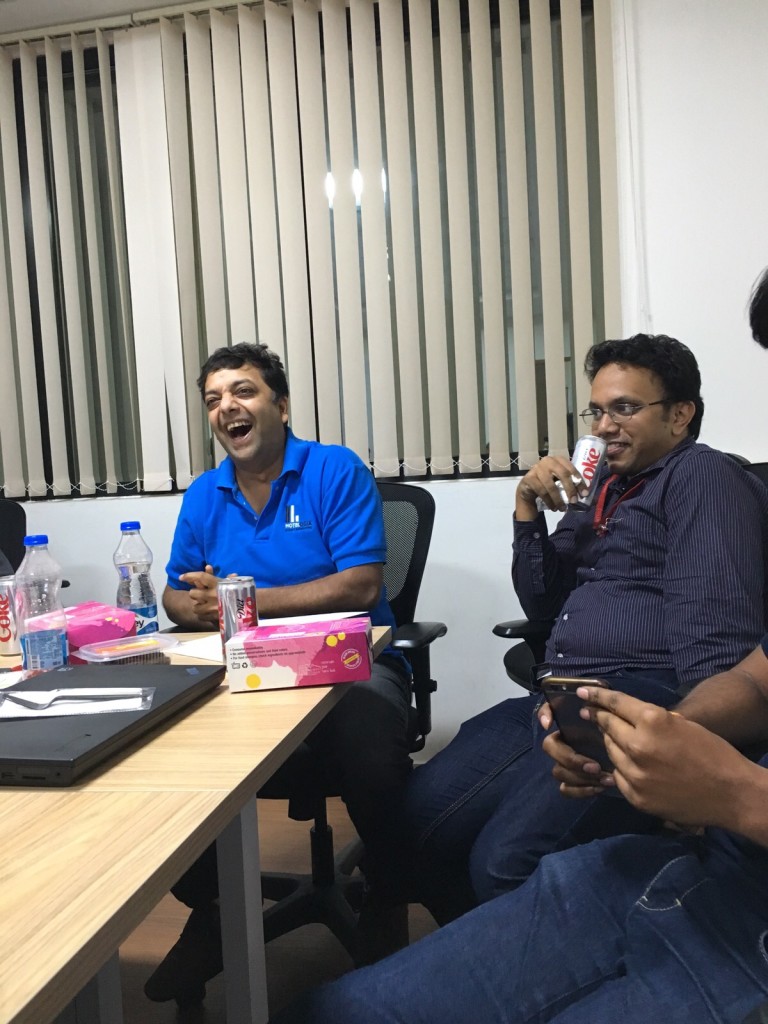
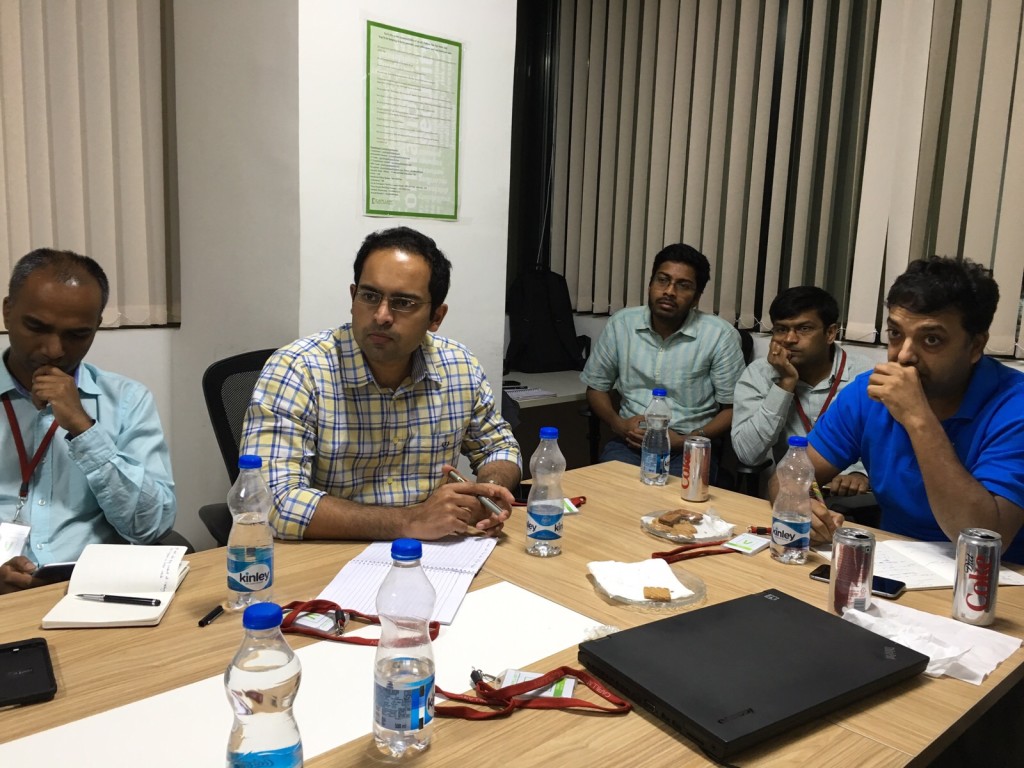
To get answers to some of these questions and more, iSPIRT organized a playbook roundtable – “Running Inside Sales for US, from India”. It was moderated by Suresh Sambandam, CEO, KiSSFLOW and I was fortunate to be part of it.

This blog aims to highlight some of the key learnings from the discussion.
Product-Market fit
This may sound cliched but getting Product-Market fit right is critical before you begin your sales process. Without getting this right you are just shooting in the dark.
Branding and positioning needs to be aligned to what the customer thinks/needs. Customers won’t be thinking the way we are – brand needs to solve that. One way to achieve this is to start by having your product / company name synonymous with what your potential customer is looking for. There are plenty of examples out there – Recruiterbox – Recruitment software, Freshdesk & Zendesk – Help desk software, SalesForce & InsideSalesBox – Sales/CRM software, KiSSFLOW – Workflow management software.
Marketing / Demand generation
Most early stages startups work on an inbound lead generation model. This means, getting SEO right and having a website that looks great & conveys the right message to your prospect is a no-brainer.
One point that came up during the discussion about SEO was content marketing. Invest in building great content for your users and they can prove to be a good source of inbound leads. Also important to remember is the role of distribution of content. No point in having great content if it doesn’t reach the right audience.
Interestingly, Quora was mentioned a good source of leads if answers point to content you have generated.
Other lead generation strategies that were discussed
- Adwords : important to make a list of primary and secondary keywords and bid for them so that you end up in the first page of search
- Listing on business app marketplaces – Google Apps, Capterra
- Outbound lead generation : Some tools to get a database of companies – Discovery.org, DataGuru, Datanyze, Rainking. Use tools like Sendee or Amazon SES for outbound email campaigns to get better open, response rates.
- Doing Paid webinars at domain specific sites : need significant effort and money.
- Analyst relations : KiSSFLOW has used Capterra, G2CrowdSource, Gartner and Forrester, TrustRadius. Getting listed is not difficult. Improving ratings needs time and effort
Inside Sales Team Roles

Before setting up the sales team, it is essential for the founders to map the entire sales process. This sets the tone for the sales team to follow.
Suresh raised an important question – Is your product complex enough to necessitate two roles – SDR & AE.
Sales Development Rep (SDR)
- Should be good with talking and selling and need to do the bulk of talking and writing to customers
- Generally have about 300-400 leads to work on and set demos for AEs .
- Incentives – At KiSSFLOW, it is composite – based on email opens (they have some metrics), completed demos and a small portion of booked revenue.
- Qualify leads based on multiple factors including no of active sessions, user-base, profile of signed up user etc.
Account Executive (AE)
- Typical AEs are prior pre-sales guys with ~4 years of experience
- Have very good product knowledge
- Important metric for AEs is “Time to first WOW / Magic moment”
- They typically floor the customer during the demo by spontaneously configuring everything needed during the session itself.
- Should be able to figure out whether a discount would help close the deal.
- Generate leads on their own other than leads from SDRs
Hiring
An interesting suggestion that came up was hiring AIESEC students for sales roles. These students would be foreign nationals visiting India on an exchange programme and are generally available to work for about 6-12 months and would be a good fit.
Some of the companies mentioned, they have a intensive training program to train SDR’s.
Pricing
Important learning – many make the mistake of making quick decisions when it comes to pricing, and not giving it enough thought. Needs to be very simple, but also needs to be constantly worked and improved.
Tools & Resources
Some of the marketing & sales – tools & resources used by the participant companies
- LeadSquared : Generate landing pages easily for campaigns
- Sendee / Amazon SES : For email campaigns
- Discovery.org, DataGuru, Datanyze, Rainking : Lead database
- FullStory : Recorded video of user actions/activities. Alternative tool, MouseFlow.
- Moz : to check SEO ranking
- Pipedrive, SalesForce : CRM
- Wappalyzer, BuiltWith – technologies used on website – useful for competitor analysis
- Guide to marketing & selling in SaaS – A Jump Start Guide To Desk Marketing and Selling For SaaS – thanks iSPIRT for this.
Closing thoughts
It was really a insightful and informative session and a great starting point in Sales for many of us.
Thanks to
- Amarpreet Kalkat, Frrole & Avinash Raghava, iSPIRT for organizing this round table
- Suresh Sambandam, CEO, KiSSFLOW for moderating the session
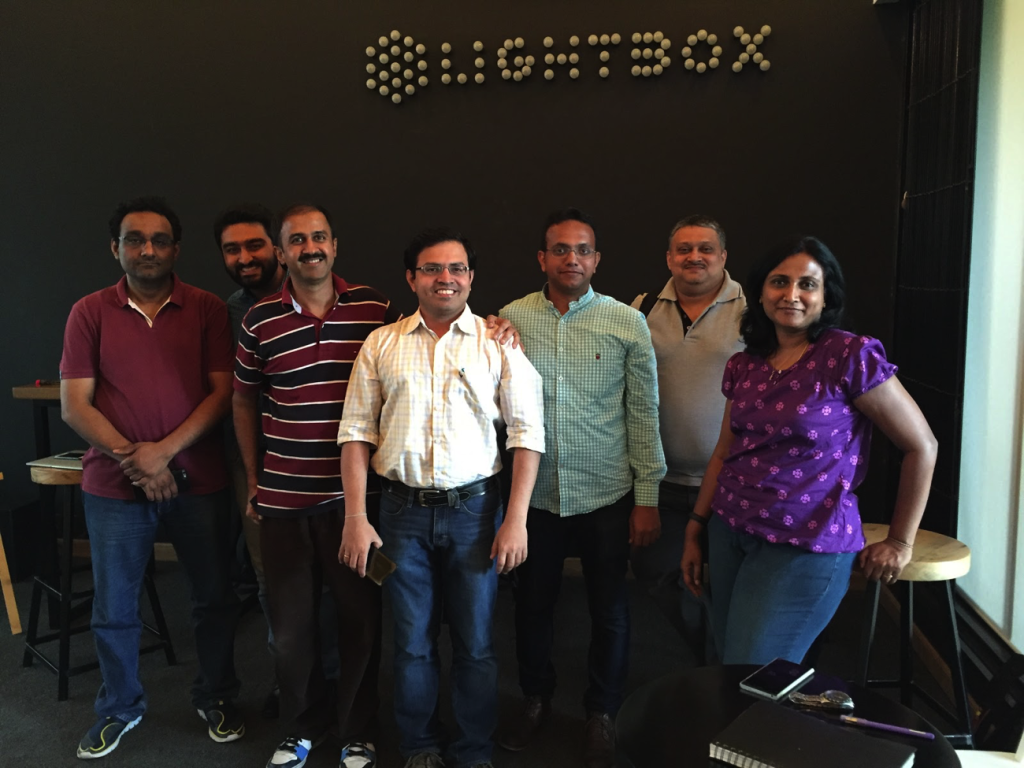
- Other startup founders for sharing your insights
- And finally, Sumanth, CEO, Deck App for hosting us and for the sumptuous pizzas, tea and biscuits.

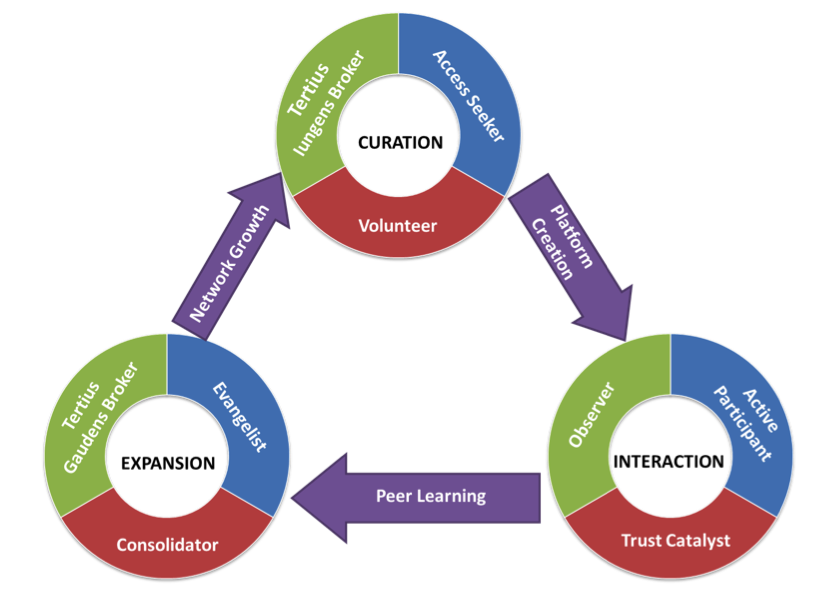 The insights from this study provide clear guidance on how to systematically create experiential knowledge networks in emerging ecosystems. It also highlights the important role played by entrepreneurial connectors such as iSPIRT in nurturing these networks.
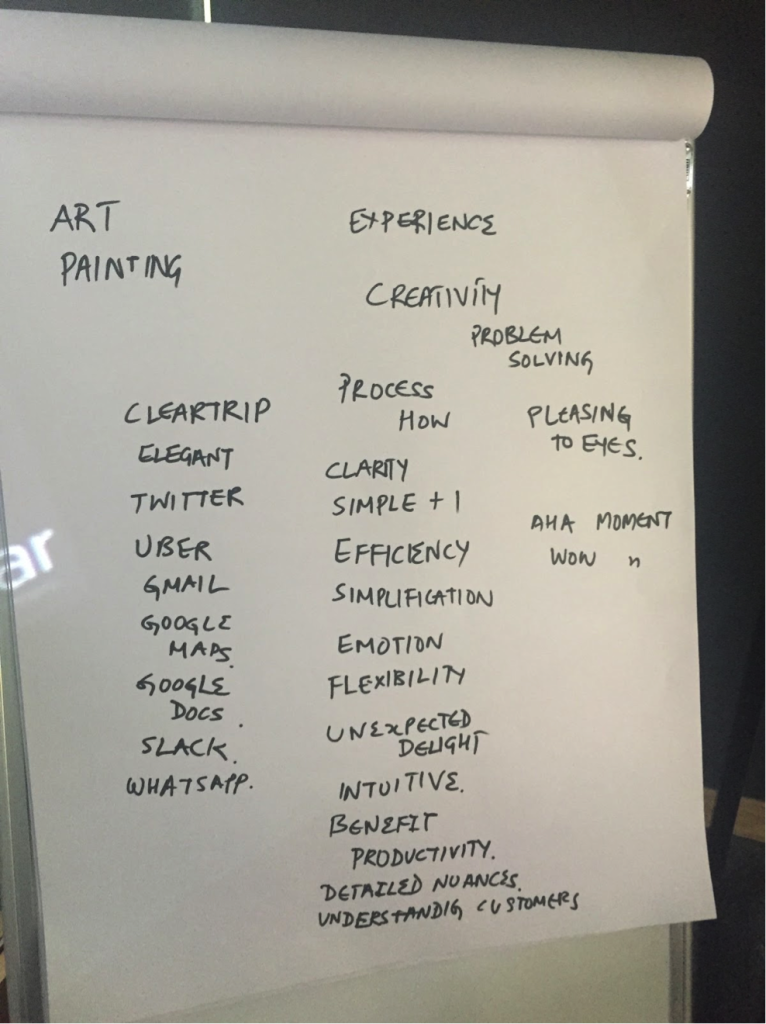
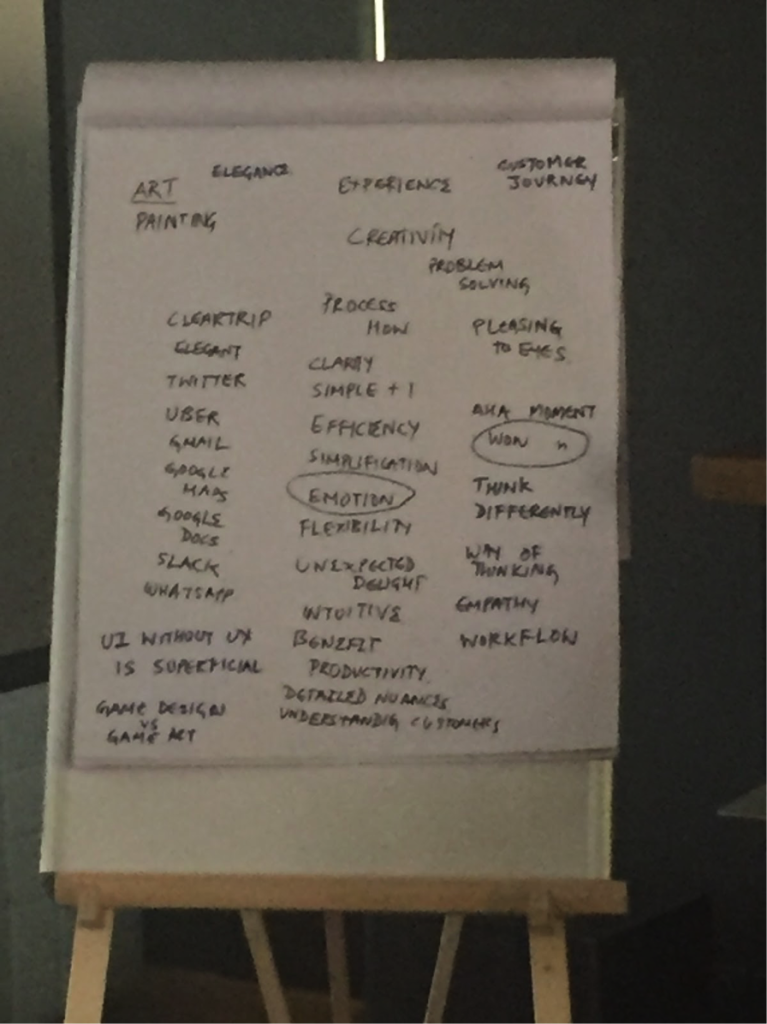
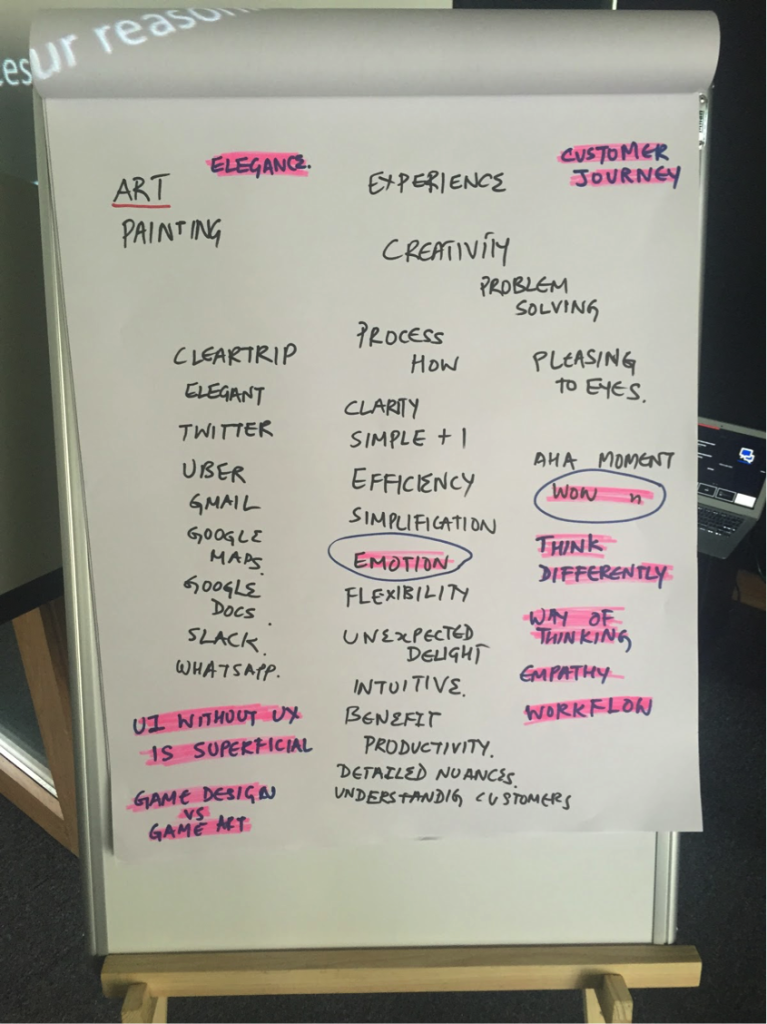
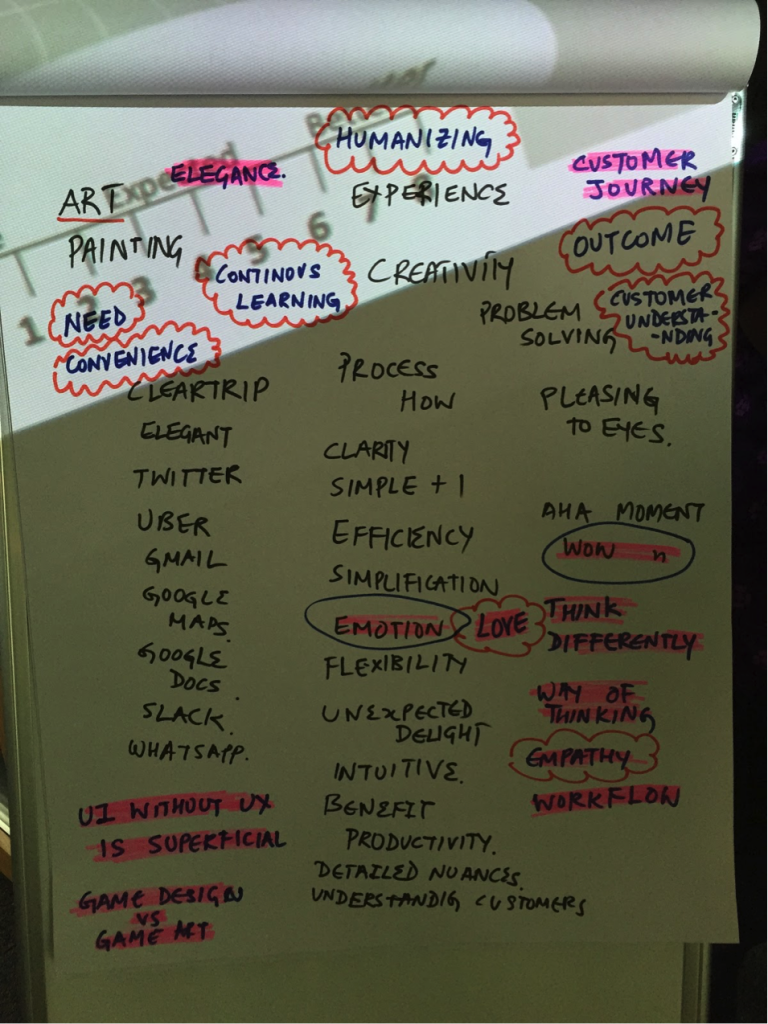
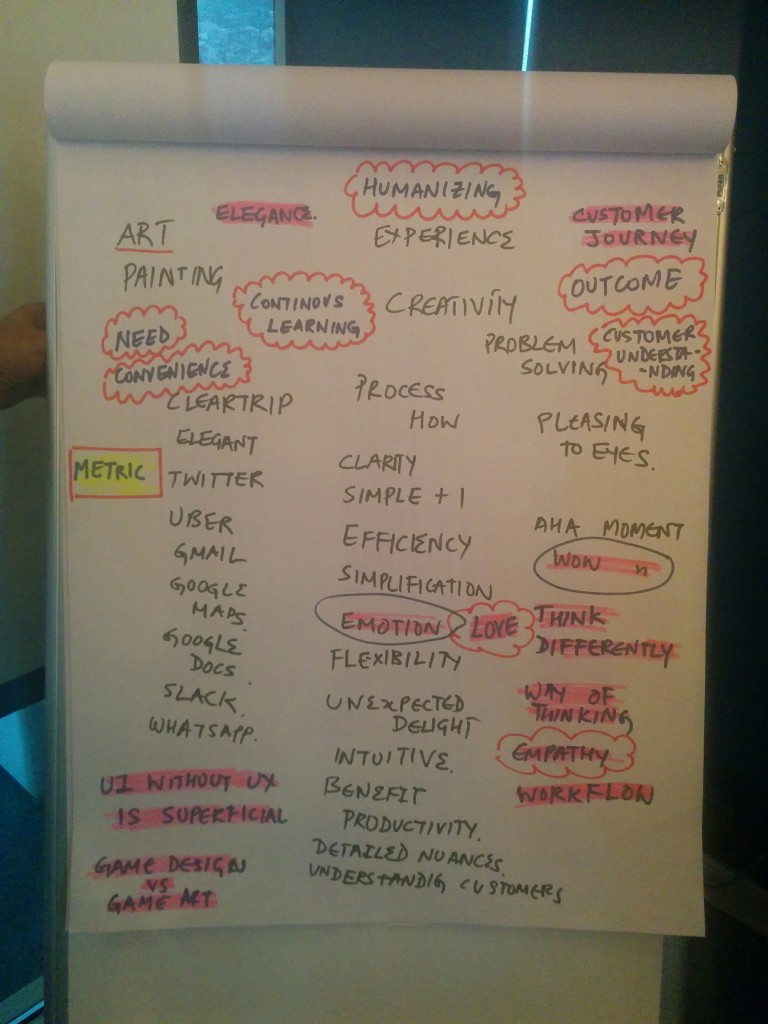 Throughout the session we had one white board on which we wrote what design means to us. We wrote apps we love and products which we consider as good examples and inspiration of good design. The participants initially thought design had a lot to do with ‘Art’, ‘Painting’ or ‘Creativity’. As we went further, our understanding evolved and ‘Emotion’, ‘Customer Journey’, ‘Elegance’ were the new keywords on the whiteboard.
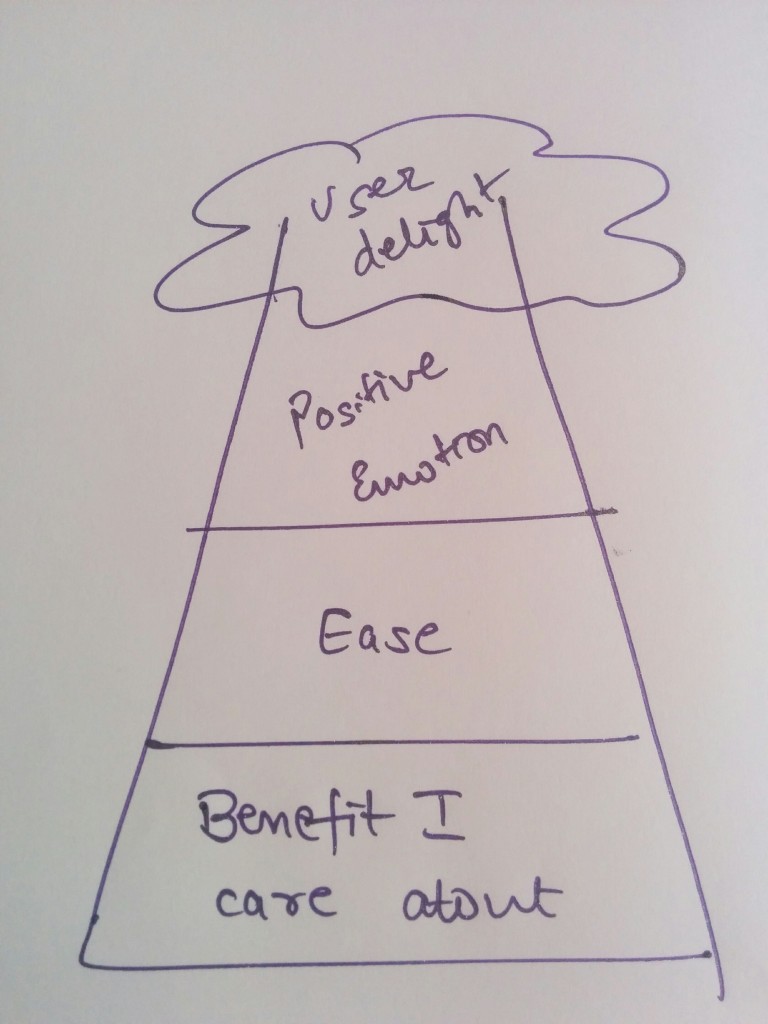 There is this simple pyramid which is quite self-explanatory for product making. Bottom to Top it reads,
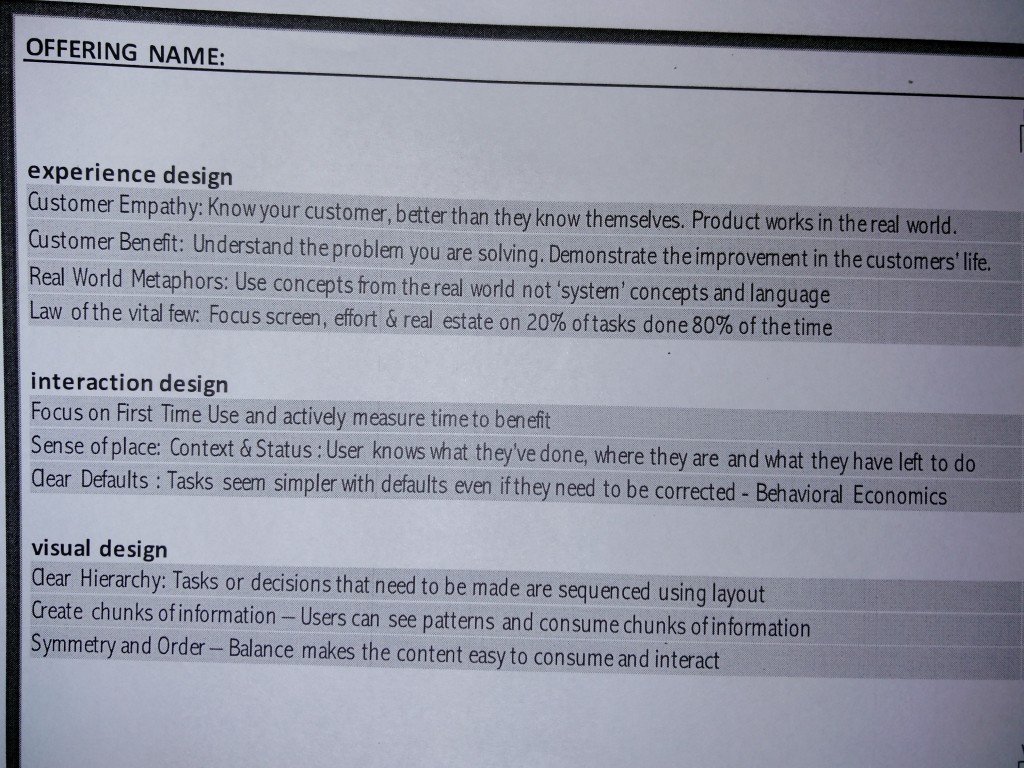 This experience made us understand and be aware of the small and subtle difference between good and bad design. I was able to realize and conclude how crucial it is to be empathetic to customer needs and when, where and how they experience a product / service. Hence, it is essential to understand things from the customer’s perspective which eventually helps us improve the utility of the product and services that one offers.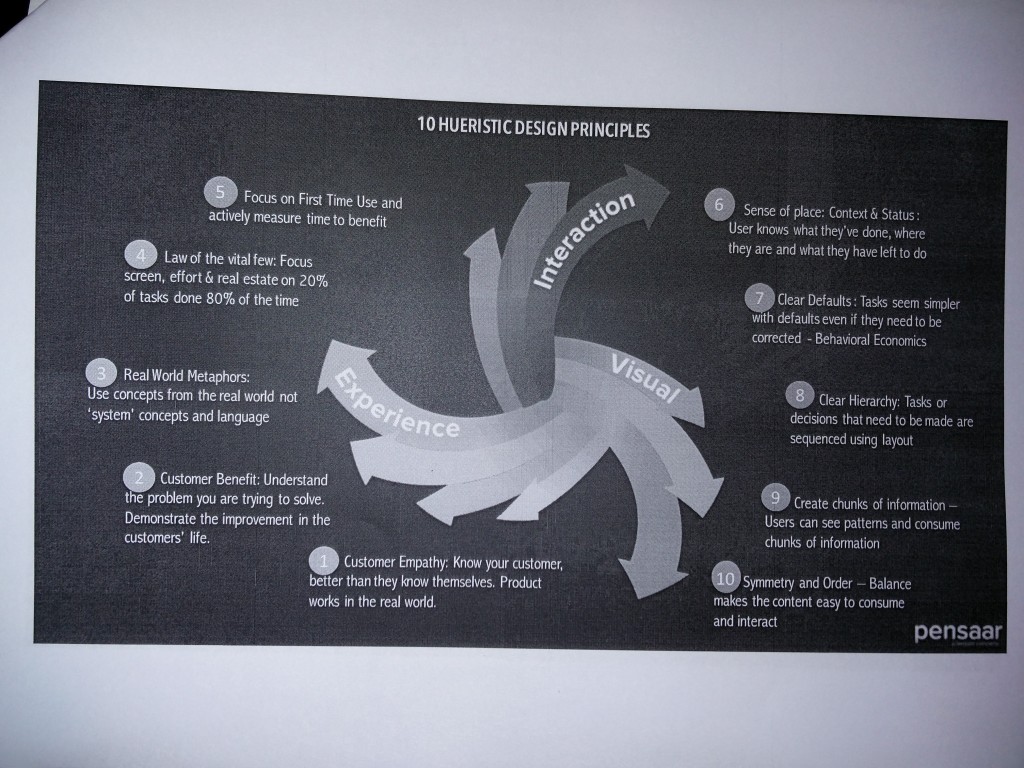
 So India won against Pakistan in the world cup match….again. I’m sure none of you would have missed it for the world. As you watched every ball with your heart in the mouth, you would have noticed some players performed while others faltered. But in the midst of it, one man stood tall. Virat Kohli, once again proved that he can perform in the toughest of conditions against the best of teams. So what makes Virat Kohli click where other great batsmen stumble ?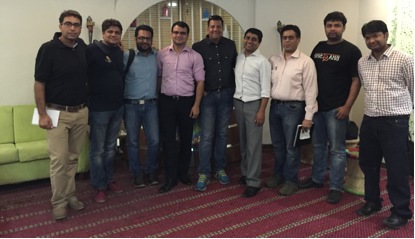
 Channel Management was the another crucial aspect discussed. Dinesh Gupta of Busy software(www.busy.in) led the discussion. Busy competes with Tally as a market leader. They built and scaled a product in a market where tally is a houseold name amongst Chartered accountants their key evangelists. Couple of important points amonst many pointed by Dinesh are here. Firstly, Identify partners for whom your product and revenue are substantial part of their business. In other workds they need to have their skin in the game. Otherwise you’ll end up having a lot of channel partners but no sales. The other important aspect of channel sales is to educate the partners. Education helps twofold. It creates a buy-in amonst the partners who can then sell better. Plus it helps them put the value proposition better in front of their customers. The group also discussed channel margins and how much to pay. While it was a long discussion, the crux of it was that you should pay partners well , may be more in initial days to get a foothold in new markets. It has to be enough of a motivation for them to sell. Subrat Krar from Vidooly also shared his experience on how they are leveraging marketing agencies as channel partners to expand their video analytics software.
 Premium/Free Trial vs no pricing mentioned on website was another aspect discussed. Different people have different models but largely the group agreed that most are moving away from freemium and those targeting enterprise do not prefer to display the price on the site at all as it varies by scale and need of clients.
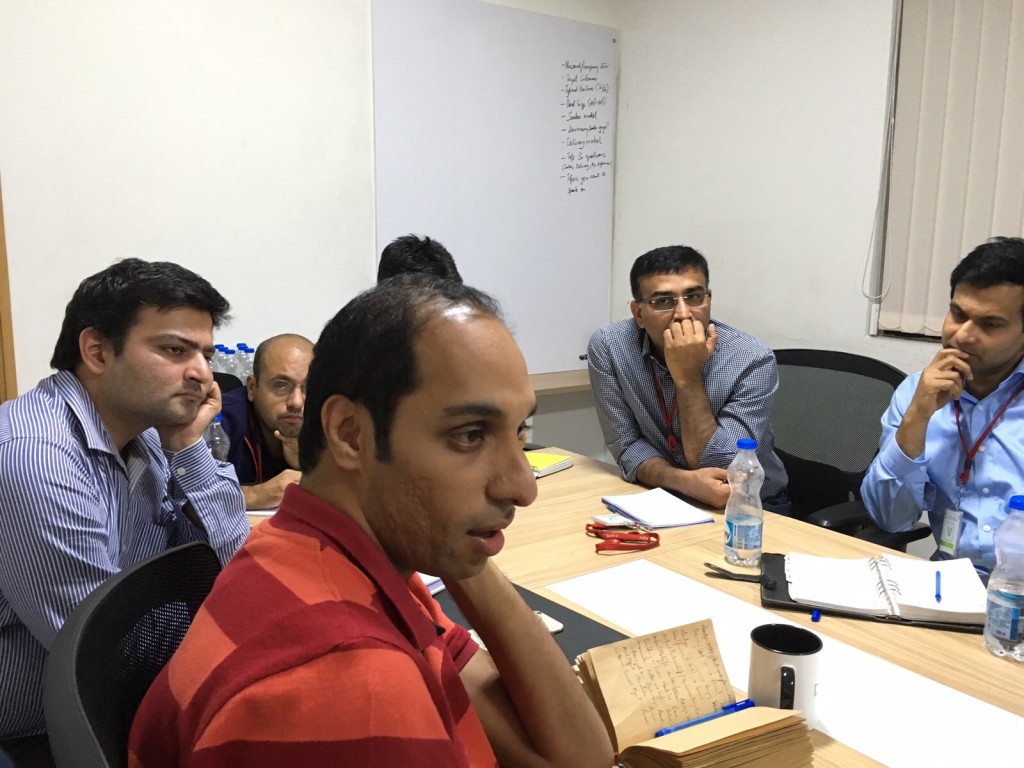
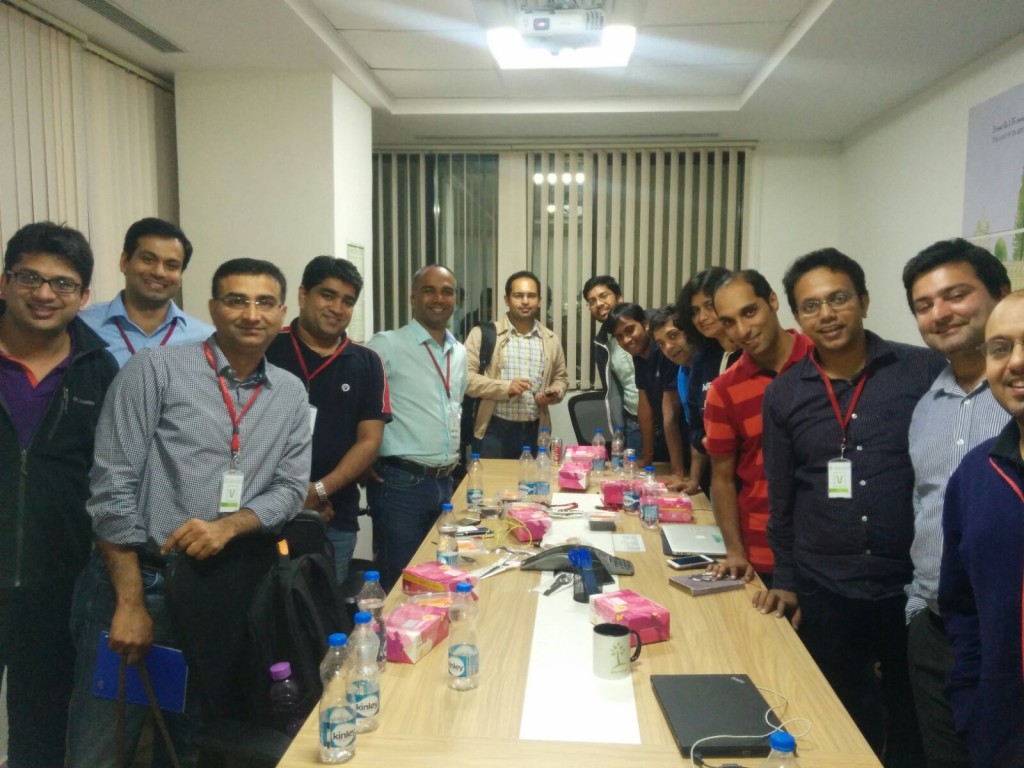 In this Round table, Aneesh was leading and moderating the discussion. He leveraged the experience of other founders which made the most out of few hrs of interaction. The participants are founders of mid-stage startups, who have good-size customers and have decent ARR (Annual Recurring Revenue), growing and scaling.
 How to acquire customers in new international market?
 How is to do pricing for your product?
 How to provide incentives for your IS(Inside sales) team?
 Centuries ago Columbus took an adventurous sea journey to discover India in search of gold and in the process stumbled upon America. It is ironical that after ages we Indian product entrepreneurs are re-embarking upon the journey to rediscover America in search of gold, just that we no longer trust the sea and prefer to go via the cloud.
 There is a school of thought which believes inbound marketing using content and blogs gives you good quality low cost leads over time. I personally belong to that group having built SalesPanda, an inbound marketing product. But there is another set of people who feel its better to go target the exact customers you want to bring in via outbound. I must say this round table was dominated more by the latter than the former. Like Sachin from Insidesalesbox.com shared the perfect analogy of fishing with a spear and not the net, its yours to choose. In the same room we had two successful startups using both the methodologies successfully. On one side we had Samir our speaker from shop socially who has 70% of leads from outbound email and telecalling and other side we had Sidharth from Wingify(VWO) who have 70% leads from inbound content. Ideally you need to master both and leverage one with the other.
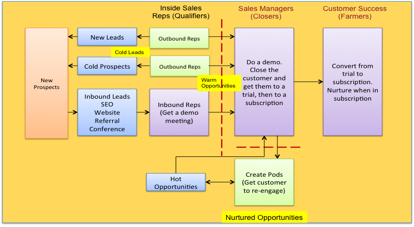 Once the database is ready, import it to a marketing automation tool, in case of sell socially they use Pardot. Create a drip marketing campaign across different offering. Segregate the prospects as R,C,O – People who respond,click or open your mailers. The inside sales team calls out to people who atleast clicked on the email so its never a cold call as atleast the customer has heard about you before. The chart below details the emailing process. The prospects move to a CRM solution where the lead is progressed. Shop socially use Salesforce and Sugarcm but any other good CRM would do. Ajay from Salezshark also shared how their CRM software provided an integrated mobile ready solution. It have built in contact database seamlessly integrated into the solution. Do check out !