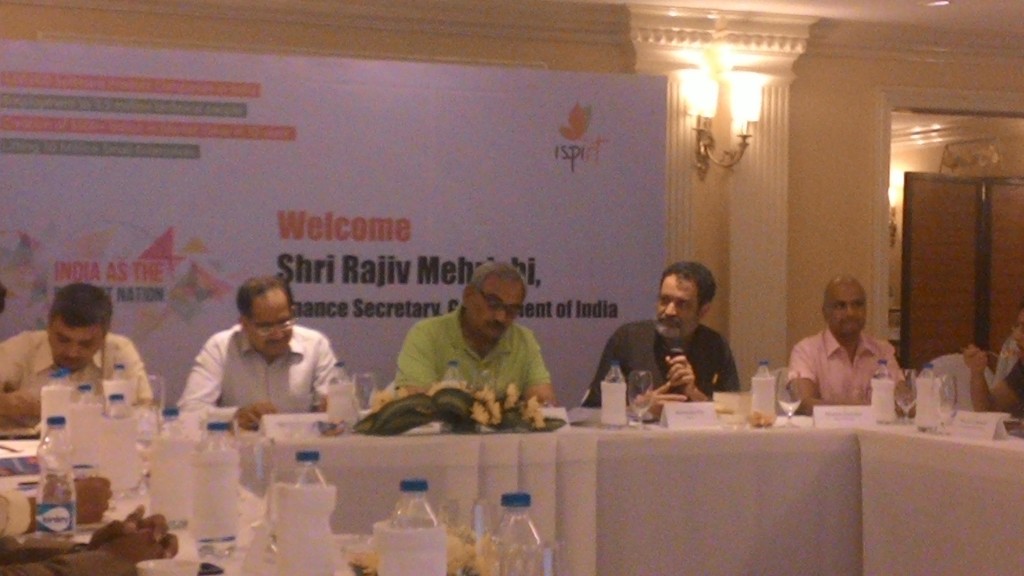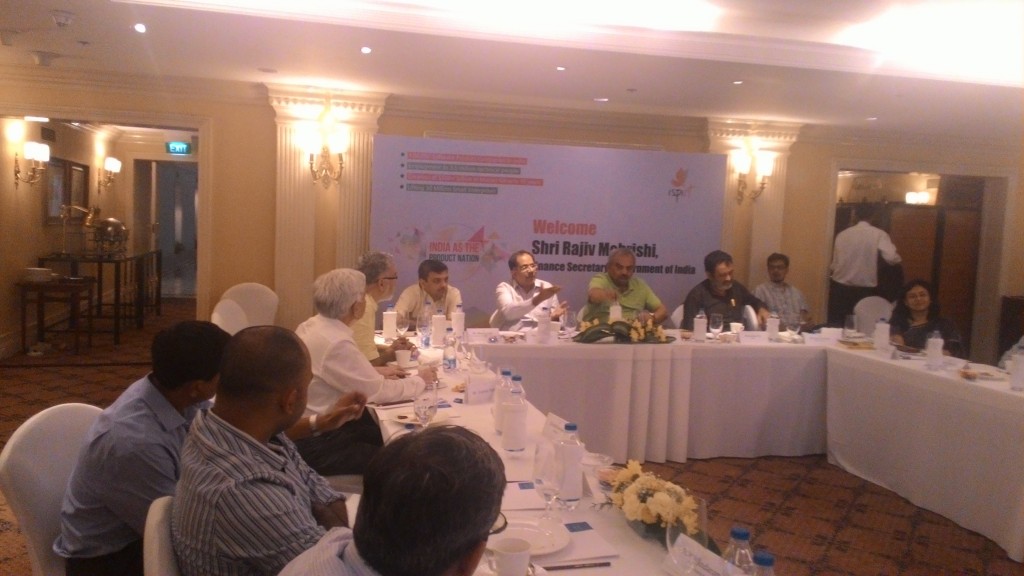

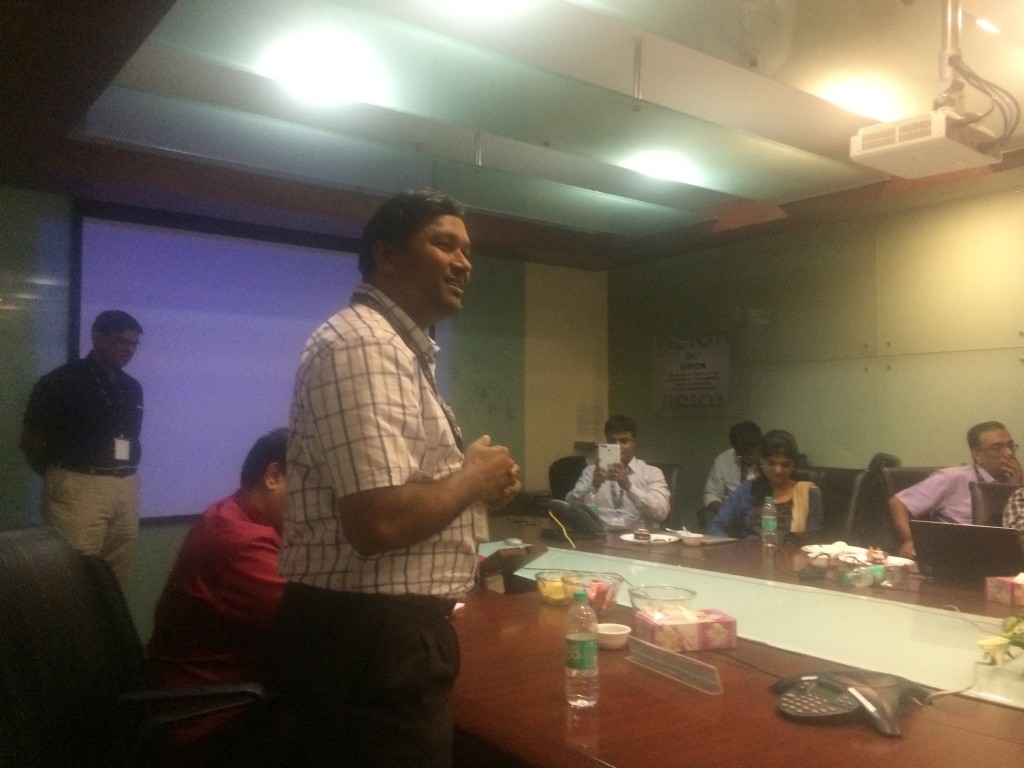
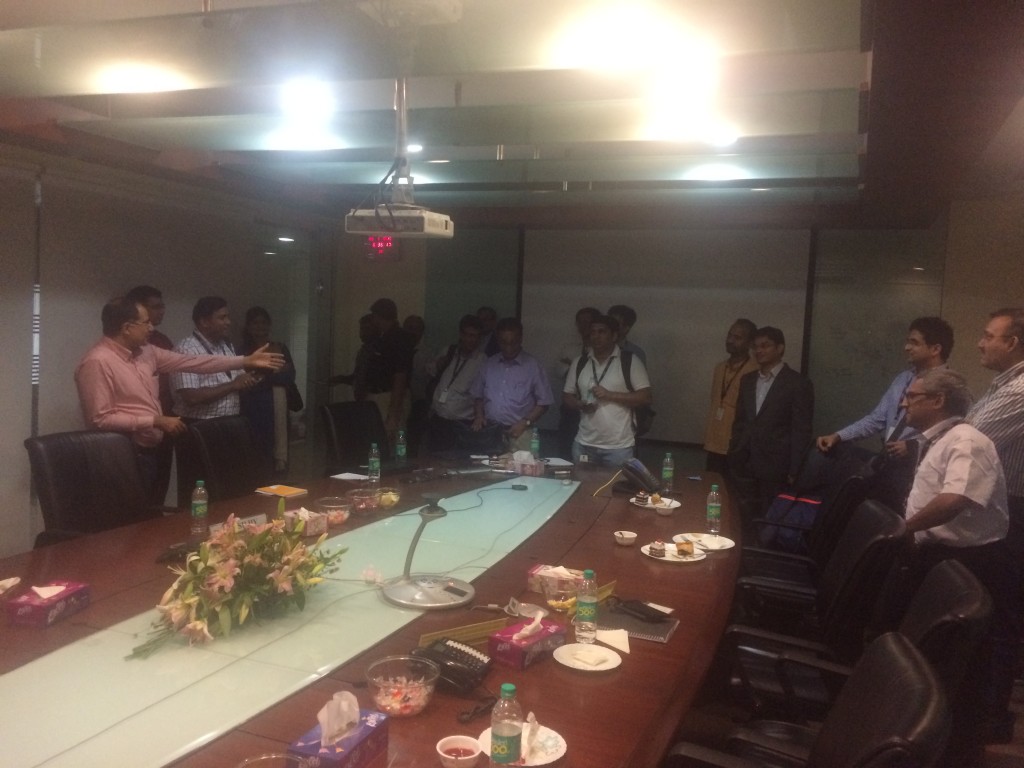
Mr. Arvind Subramanian, Chief Economic Advisor to the Government of INDIA, has been named as one of the world’s top 100 global thinkers by Foreign Policy magazine. After stepping into the shoes of Dr. Raghuram Rajan as Chief Economic Advisor, he is also a widely cited expert on the changing Balance of Global Economic power, as it pertains to INDIA & China. He is also the author of “INDIA’s TURN: Understanding the Economic Transformation“. Mr. Arvind specially travelled to Bangalore to interact with software product industry and discuss policy with the the policy team of iSPIRT Think tank.
Last week, we got the privilege to share our vision with Chief Economic Advisor of India, @arvindsubraman
/@sharads pic.twitter.com/YAhK17dKhn
— NowFloats (@NowFloats) June 3, 2015
In the 4 hour meeting, the energy that emerging companies brought out with each presentation was amplified as the discussion progressed. In the end, I must admit that there was a euphoric feeling that this movement of creating public goods with the Social Commons model is really on-to-something BIG!
Not all elements of the session can be reproduced here, but this article is an effort to provide you the important highlights.
 What was so Infectious? Its the Mirror Neurons, Stupid!
In the first session, as it has become customary, about 8 carefully curated product startups which started in INDIA, with audacious aspirations, and which have already made significant GLOBAL impact while still retaining their Indian-ness, presented their stories. Almost every story was about Product Entrepreneur’s who dared to dream BIG, not just from themselves but for leap-frogging INDIA and the world. The Goal set out for the session was to show-case the behind-the-scenes transformation that is taking place in the software Product Industry landscape.
The Irrational choices of many Entrepreneurs were show-cased in their business avatars, as NowFloats, Uniken, Tally, Forus Health, Team Indus, FreeCharge, SnapBizz & Ezetap. While the strategy choices seemed Irrational, the success these business are having today, and the impact they can have tomorrow to reclaim India’s glory was self-evident. The outcome of the session was remarkably different from the goal the session set-out to achieve. What became apparent as the session progressed was the infectious effect it was having on each participant in the room. It was as if the Mirror Neurons from these passionate Entrepreneurs was affecting not just the minds, but it was affecting our Inner Spirit. The Infectious nature of the session’s outcome in many ways mirrored the outcome of these businesses.
 What is the Cure? More Infection. Make India Go Cashless.
In a thoughtful next session the discussion moved toward more earthy and material realization of how Technology & Infectious energy of the startups can be leveraged to leapfrog INDIA. This discussion was about how to make India Go Cashless in 4 years. The benefits of going cashless are many. It can expand micro-credit to small businesses in a big way, for even street-hawkers (Thelewalas) to be able to digitally get credit and also seamlessly receive money from customers. Sanjay Jain (iSPIRT Open API Expert Team member, former Chief Product Officer of Aadhaar) and Abhishek (iSPIRT Colunteer, CEO Eko) presented a comprehensive approach and suggested a new Program, Jan Samridhi, for the Government. This builds on the Open API work that iSPIRT has already done (in eSign, UPI and GTSN) and proposed specific and inter-related policy and regulatory changes. The only real way of achieving this is to have more agencies in the Government, the Regulatory institutions and people to participate. So in effect, the cure really is to infect more people with the Spirit of Social Commons. The discussion clearly bridged some the intellectual distance between Delhi and Bangalore.
Advice from the Chief Economic Advisor
Mr Arvind, in his own-words was blown-away with the enthusiastic zeal and business performance of the Product Startup Ecosystem. He however was also clearly in his elements as he carefully constructed the broader picture by taking the various elements from the Individual presentations. Some of his suggestions and advice to the Startup community were as follows.
- How soon can we marry the Private Entrepreneurial zeal & Public Goods created by such movements?
- Can we use and leverage the existing products automating, say, Govt Fair Price shops?
- While mildly chiding Product Entrepreneurs to dream even bigger by including Government, he asked if we can help realize other broader over-reaching goals like Government Technology Platforms for Expenditure tracking?
He even offered to visit Bangalore and participate 2-3 times a month in various such initiatives to enable routine conversations with Policy Makers and Entrepreneurs.
 Conclusion
The entire program was highly Interactive, Infectious & Confidence building. It gave a sense that may-be within 4 years we can Make India go cashless. It also re-affirmed the new Paradigm of creating Public Goods with a Social Commons approach (Open source approach). It is important to co-create a digital INDIA, not just with the Entrepreneurial zeal, but by getting Government and Institutional bodies involved as well. These Infectious power-packed dialogs that iSPIRT is fostering will help us rewrite the script of our Nation, and will help us reclaim its lost Glory. We will become a Product Nation soon, it seems inevitable. Be a part of it now. Go ahead, spread the INFECTION, not just the word.
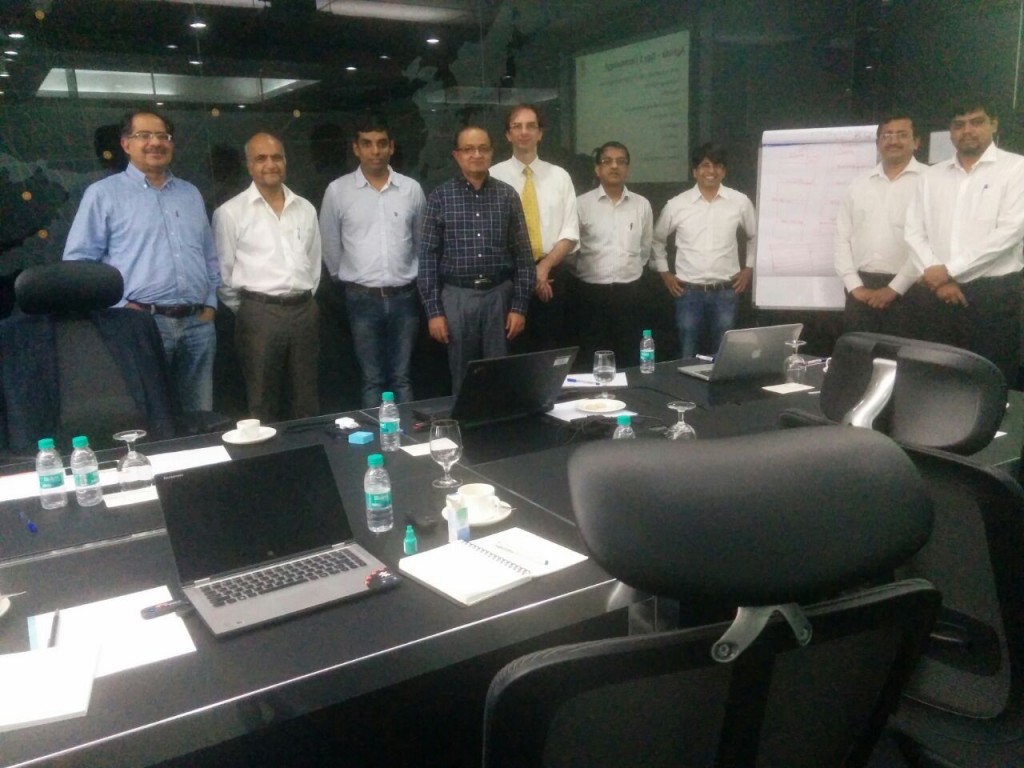 Our Open API effort is based on some core principles: