

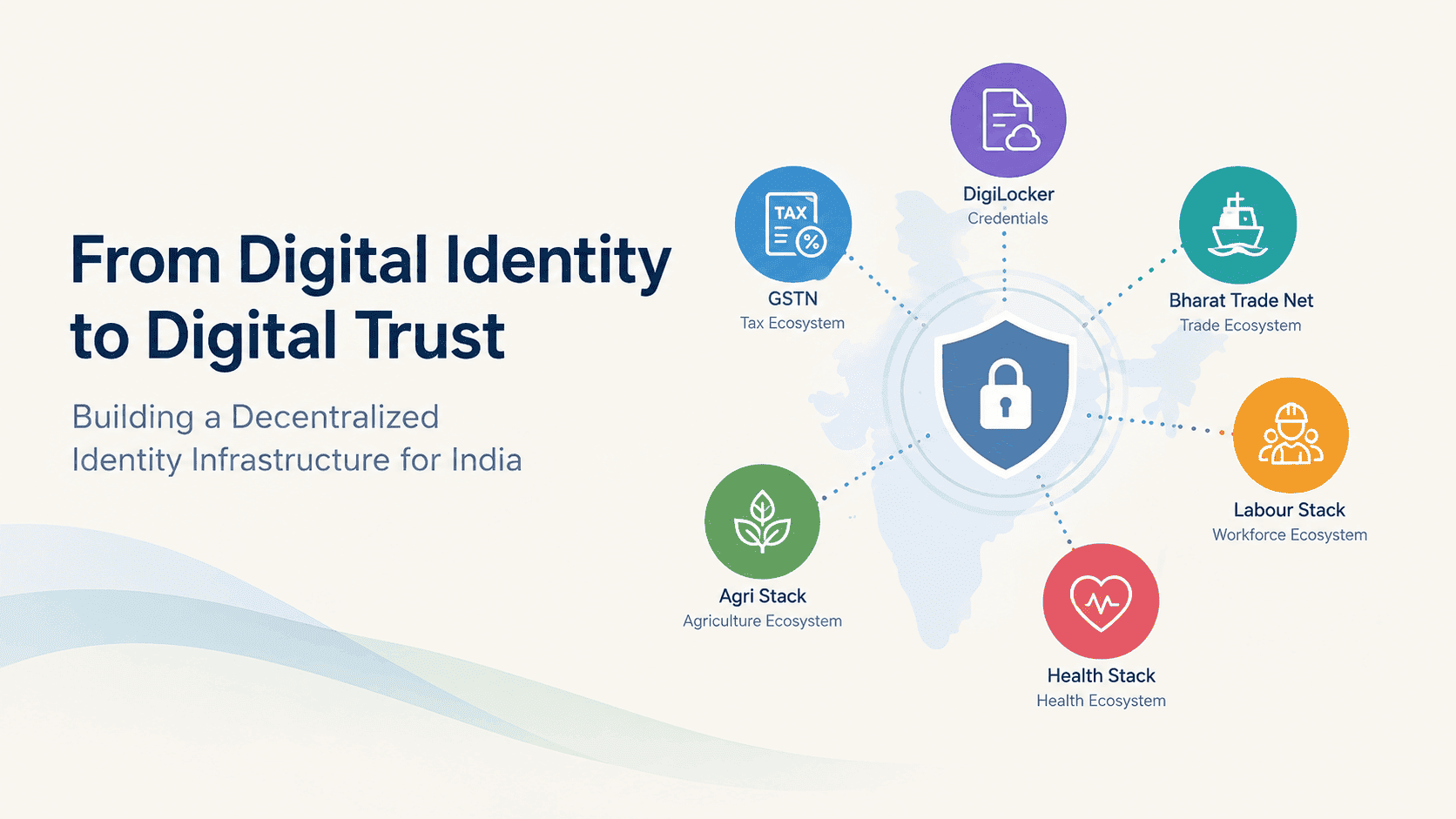
India has built a growing set of Digital Public Infrastructure ecosystems: DigiLocker, GSTN, Bharat Trade Net, Labour Stack, Health Stack, Agri Stack and others. Each serves a distinct domain, with its own institutions, participants and data. As these ecosystems mature, the challenge is shifting. It is no longer enough for systems to connect. An ecosystem increasingly needs to trust an identity or credential issued by another ecosystem.
Bharat Trade Net may need to establish a business’s GST registration or other regulatory credentials. Labour Stack may need to verify qualifications or professional credentials. Financial institutions may need to establish licences or approvals issued by government systems. Similar requirements will emerge across sectors.
Today, this trust is often established through platform-specific APIs and database verification. As the number of ecosystems grows, this creates a web of bilateral integrations and dependencies. The next generation of DPI therefore needs a common foundation for decentralized identity and trusted verification, allowing independent ecosystems to recognise and verify one another without becoming one platform.
Decentralised Identity, Shared Trust
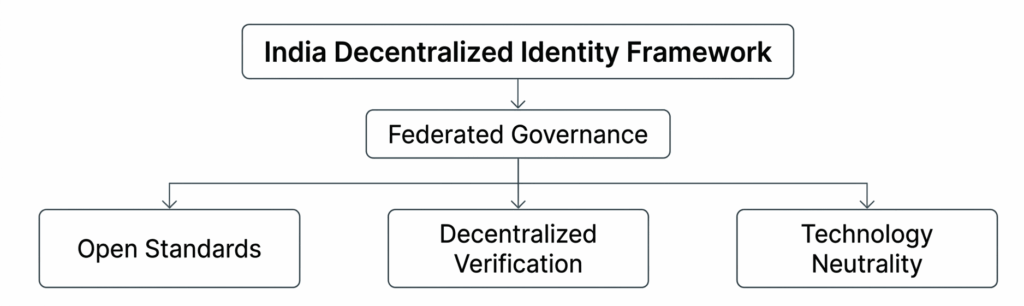
The India Decentralized Identity Framework (IDIF) proposes such a foundation. It establishes a shared trust framework built around three components: a Governance Framework, a National Trust Registry and Federated Identity Registries.
The model does not create a central repository of identities or credentials. Each participating ecosystem retains responsibility for its identities, credential issuance and operational infrastructure. Its Identity Registry maintains decentralised identifiers, DID Documents and public verification information, while the National Trust Registry provides the common accreditation layer.
The distinction is important: identity remains decentralized; trust becomes interoperable.
From Database verification to Cryptographic Verification
The more fundamental change is how a credential is verified. In a database-dependent model, the verifier typically goes back to the issuing system to establish whether a credential is valid. With Verifiable Credentials, the issuer can digitally sign the credential and the recipient can independently verify that signature using trusted public-key information.
The issuing ecosystem remains authoritative for issuing the credential, but its underlying database does not have to participate in every subsequent verification. The IDIF framework explicitly proposes independent cryptographic verification without direct access to the issuing platform or database.
The shift is therefore: From “connect to the source to verify” to “verify the credential issued by a trusted source.”
APIs remain important for transactions and services requiring live information. They simply no longer need to carry the entire burden of establishing trust.
How Decentralised Trust works
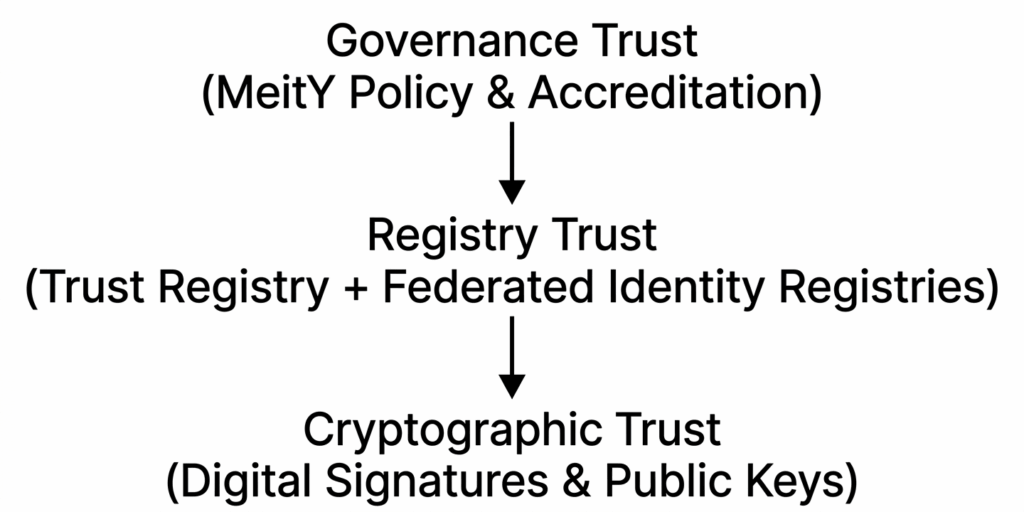
For decentralized identity to work at national scale, trust itself needs a common structure. IDIF separates this into three mechanisms: governance and accreditation establish which registries are trusted; identity and key resolution establish who the issuer is and where its verification information can be obtained; cryptographic verification establishes that the credential was issued by that entity and has not been altered.
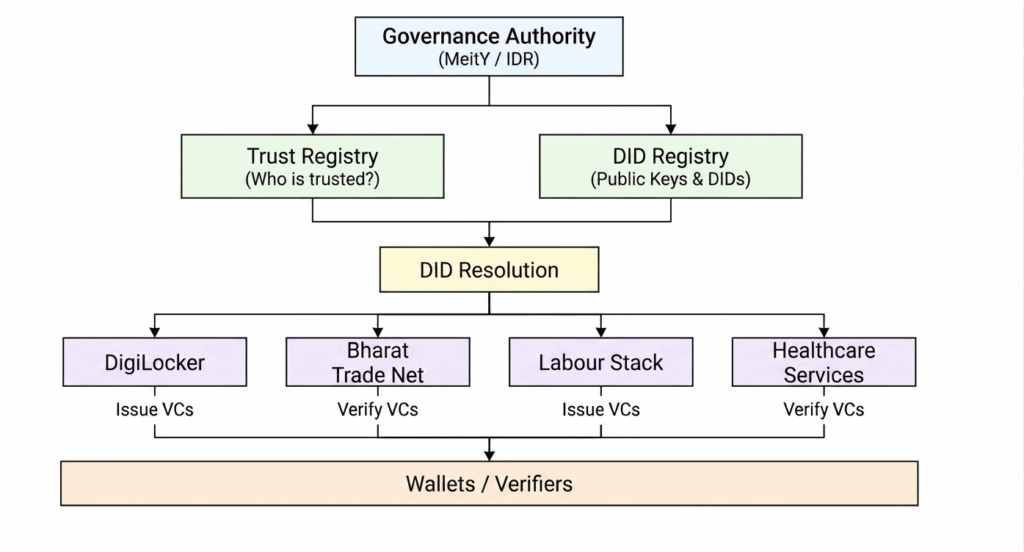
A verifier can therefore establish trust without necessarily accessing the issuer’s underlying database. The National Trust Registry establishes that the relevant Identity Registry is accredited; the DID Resolution Layer retrieves the issuer’s verification information; and the verifier validates the credential cryptographically.
Trust with less data
This architecture also changes the privacy model. A verifier often needs to establish a fact rather than obtain an entire record. Verifiable Credentials can support selective disclosure and, where appropriate, zero-knowledge techniques. The broader shift is from sharing data to sharing proofs.
Credentials can therefore be independently verified while reducing unnecessary data exchange and continuous dependence on issuing databases — one of the explicit objectives of IDIF.
The Foundation for DPI 2.0
India’s first generation of DPI created foundational rails for identity, payments, documents and data. The next generation will increasingly consist of independent sectoral and institutional ecosystems that need to interact across their boundaries. That requires more than connectivity. It requires a common way to recognise trusted participants, resolve decentralized identities and independently verify the credentials they issue.
The India Decentralized Identity Framework provides this foundation through common governance, accreditation, decentralized identity, federated registries, open standards and cryptographic verification while allowing participating ecosystems to retain their institutional and operational autonomy.
The next phase of India’s DPI journey is about building a trusted digital fabric — where identity and credentials are federated, verifiable and portable across ecosystems.