M. A. P 2013 – Your Bridge to Global Brands.
ProductNation is pleased to support M.A.P 2013 a unique project supporting Asian innovation and designed to match new companies to the most senior decision-makers in global marketing and media. Since its launch in 2011, it has had applications from over 50 new companies and awarded four “Hot Company of the Year” citations. All applications are assessed by a jury of VCs and successful media entrepreneurs who then shortlist 5 companies that are asked to join the speaker line-up of The Festival of Media. This becomes the entering company’s chance to pitch their businesses with one company being voted by the delegates as “Hot Company of the Year”.
If you are a startup which is:
- Part of the next generation of advertising and marketing?
- Behind a breakthrough idea or product that might disrupt established practices?
- Part of a new breed of Asian businesses?
Few quick links:
- Find out how to enter. Deadline for entries is 8th February 2013.
- M.A.P Asia will be running alongside The Festival of Media Asia, 3-5 March 2013, Singapore.
- View the M.A.P Asia brochure
Now Get Your Daily News through Contify
Contify is India’s leading business news, content and information provider with interests in managing databases; publishing news stories; and syndicating content from reputed publishers to global databases. We recently caught up with Contify’s CEO Mohit Bhakuni to understand more about the product and his journey so far. Here are some excerpts from the interview.
How did it all start?
Founded in April 2009 by two Indian Institute of Technology alumni in a small basement-turned-office and 1 lakh INR, Contify has grown into an 85-people strong multi-city operation in a short span of three years.
What is Contify’s proposition?
Contify positions itself as the easiest source to receive industry specific news underpinned by sound concept based search. It licenses content from publishers and uses advanced technologies to provide functionalities like faceted search and filtering to provide relevant content to the readers.
How are you funded?
Contify’s parent company is Athena Information Solutions Pvt Ltd. Athena is the largest licensed content syndication company in India. In addition, Athena generates revenues from services business by providing content related services to few international clients. Contify product development is funded by the profits generated from Athena’s business operations.
What is the vision for you company?
To become one of the most respected products for industry information in India.
What are your key offerings?
Contify is a comprehensive news and information database aggregated from over 100 publications, which gives users access to insightful business content with its smart ‘filter-based’ search platform. Contify also has a strong in-house editorial team, which covers information and reports news on a range of industry verticals including banking, finance, energy, retail, automobiles and pharmaceutical, as well as key government policies related to India’s business environment.
How is Contify different from exiting platforms?
According to Mohit, Contify provides a unique value proposition to its clients who are looking for industry news in a cost effective way. It also focuses on small to medium sized businesses that have limited bandwidth or financial resources to source such aggregated industry information.
What is your biggest challenge?
The team is consistently working on coming up with ways to enhance user experience. One such example includes de-duplicating of stories across publications to provide only unique articles that are relevant to the users.
What does the future hold?
Mohit suggested that Contify is also building customised features for its clients to enhance their experience. For instance, it recently introduced widgets directly on the website to allow users to receive customised news.
Our view is that with intense competition in the news aggregator space Contify is likely to face stiff challenges from the incumbents and in order to build a sustainable advantage it will have to continuously innovate through additional product features such as analytics that can demonstrate value for money to the clients.
Post Contributed by Abhimanyu Godara
Announcing the angel investor office hours in Bangalore
Following up on this post by Mukund Mohan, the first session of the office hours will be held on 8th January (Tuesday) at the Microsoft Accelerator (Lavelle Road, Bangalore) from 3PM – 5PM.
Aadhaar and the 7 principles of Product Management
Sanjay Jain, Entrepreneur in Residence, Khosla Labs spoke at the IPMA 2nd annual event. The Unique Identification Authority of India (UIDAI) is an agency responsible for implementing the AADHAAR scheme, a unique identification project. It was established in February 2009, with an aim to provide a unique identification number to all Indians, by eliminating duplicate and fake identities. Biometrics features are selected to be the primary mechanism for ensuring uniqueness.
The primary reason for the UID project was to establish the bona fide identity of a person. Lack of an identity proof often excludes people from many facilities and formal systems in society such as opening a bank account or access to public distribution system (PDS). In most cases the rural poor find it difficult to even produce birth records to prove their identity even to claim their (legitimate) privileges.
Sanjay Jain who spoke at the IPMA second annual event which was held on the 8th of December, was the chief product manager for this project. He spoke about 7 principles of Product Management and mapped it to Aadhaar, the ambitious Government Project.
Below is an excerpt from the presentation where Sanjay Jain took the 7 Principles of Product Management elucidated by Deep Nishar (at the NASSCOM Product Conclave earlier this year) and looked at Aadhaar through that lens:
The 7 Principles of Product bliss:
- Know thy User
- Simplicity is a feature
- Embrace Constraints
- Data is your guide
- Innovation is not instant
- Adapt
- Manifest Destiny
Know thy user: Aadhaar has a process called ‘Know Your Resident’ which is about proving the identity of a resident of India. So it has information like their name, finger print, gender, date of birth, where they live, who is their parents etc. which helps knowing the resident intimately through the data collected.
Simplicity is a Feature: What could be simpler than one person – one Aadhaar Id. The principle that Biometrics doesn’t change even with time and they are unique to a person is the basis for issuing Aadhaar.
The biometric of a person – impression of all the 10 fingers and the iris scan are the authentication or the proof of identity. There is no need for an
Aadhaar card, the 12 digit identification number and the biometric of the person are the authentication.
Embrace Constraints: There were many constraints; public funds were used so the accountability was to public as the policies and principles were sacrosanct. So a bunch of architectural principles were defined to guide the project and they were not to be violated. Some of them are:
- To use open source technologies where ever prudent
- The decision not to lock-in any vendor
- Performance matrices are made public
- Strong end-to-end security was ensured
A committee was put in place to take decisions. First data definition standards and biometric data standards were created and a broad concurrence from across the government was obtained to implement the same.
Data is your Guide: A public portal was created which gives complete visibility and transparency to anybody at any time, satisfying RTI norms. A person who has applied for Aadhaar can check status on the UIDAI website by entering his/her 14 digit enrollment id.
The UIDAI being a part of the Central government agency works with the partners whom the state government outsources the work to; they are 3 levels away from central body, so everybody in the chain gets complete visibility to all information. So the processes are standard and details of contracts are available on the partner portal. The operators had to go through rigorous training and certification before they were activated.
Innovation is not instant: Innovation takes time. Central identity repository (CIDR) is the repository where all the identity data pertaining to Biometric subsystem, Demographic data, Business analytics, Infrastructure management, Application servers etc. resides.
The attempt is to build the world’s largest biometric database, India’s current population is 1.21 billion and the UID scheme aims to cover all the residents. No country has attempted an identification and verification system on this massive scale.
The method adopted is ‘the best fingerprint technology’, the resident provides all 10 fingerprints, 2 best finger prints are taken and the success rate is 95%.
Adapt: Competition brought in a drop in prices; for example when the project started the price of the fingerprint scanners, like the ones used in the US immigration, was 5000 USD; it came down to INR 25,000.
Manifest Destiny: To take up a project of this magnitude needed conviction – One needs to believe one can do it, believe in success and work backwards.
Contributed by Mangal D Karnad, Tally Solutions

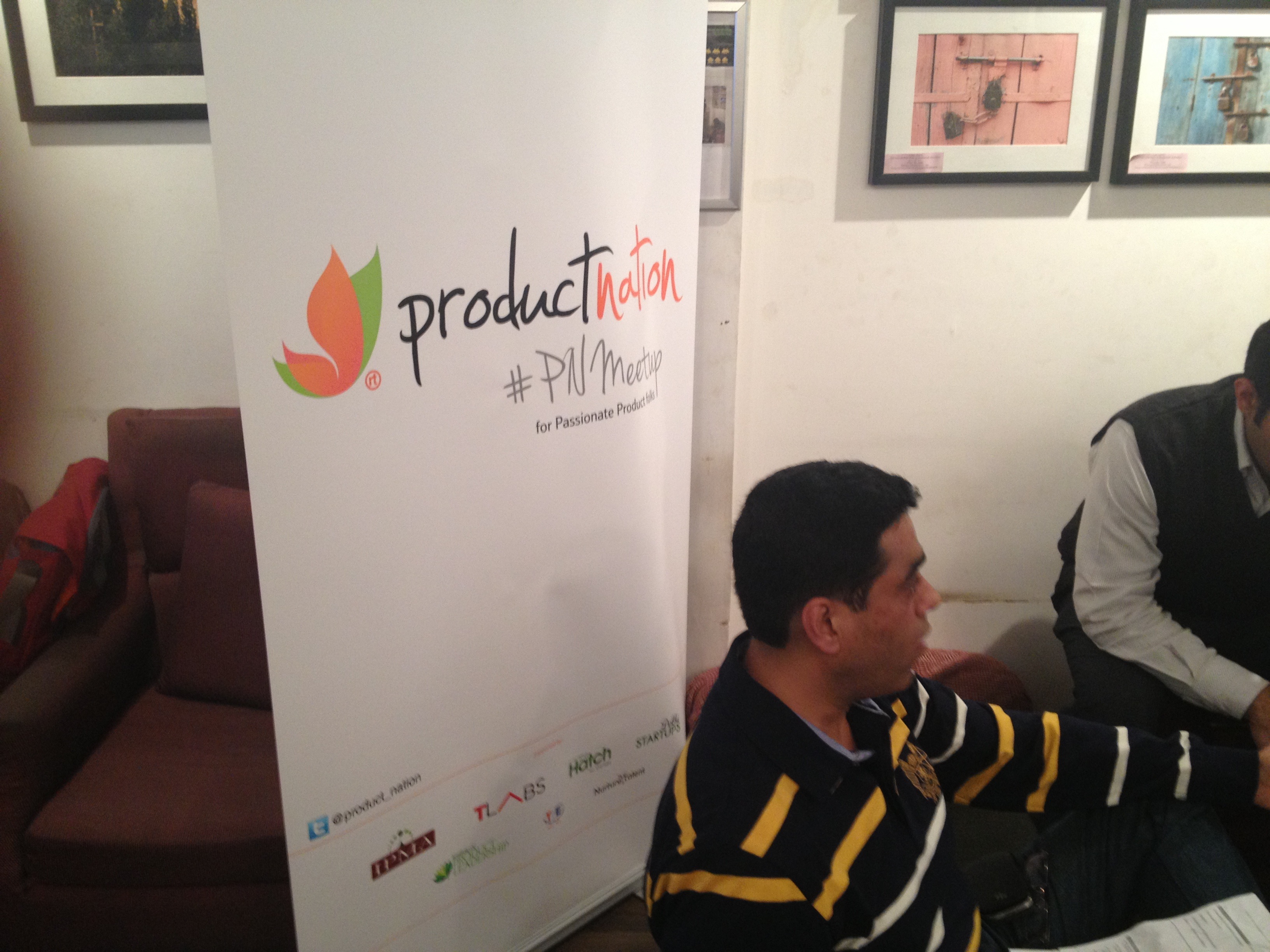
#PNMeetup – Delhi (15 December 2012) Pricing for Enterprise Sales
The event was kicked off by Arvind Jha starting out with a round of introductions. It was quickly realised that the community was well represented and people coming from Noida, Gurgaon and Delhi was heart warming to see. Arvind then went on to describe how diversity is important when you are running a business. Different regions, different customers and hence different pricing make it a much complex environment. It is in this scenario that choosing a good pricing model becomes important in accordance to your business model and scaling needs. Arvind then went on to invite Tushar from Saigun Technologies to share his thoughts and take the meet forward.
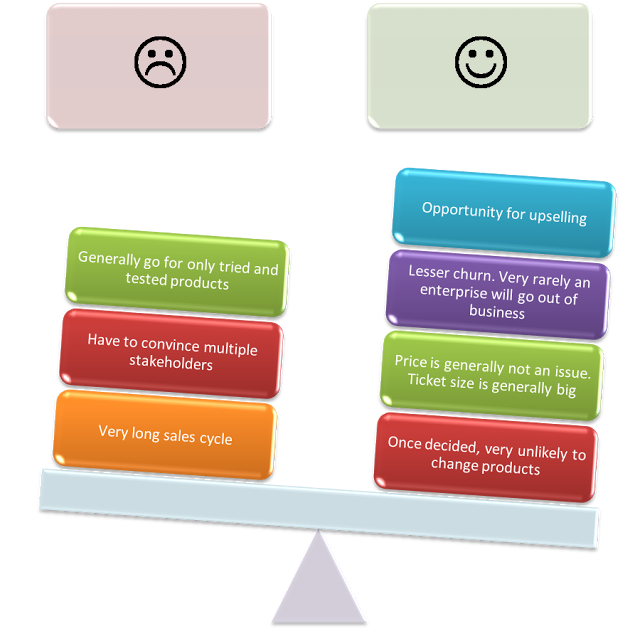
Tushar started out speaking on the relevancy or the need of pricing. The context here was clearly set when he announced that the discussion here is setting up ideas on enterprise pricing which is a whole different ball game as compared to consumer pricing. Factors like evaluation of potential customers, kind of money received from them, directing sales teams, consistency and setting a value to the offering brings in the need of pricing. He then went on to speak on the various challenges in enterprise pricing such as long decision cycles, decision matrix complexity and competition, no matter how good or new the idea is can never be neglected. A great example he shared was the case of Saigun’s HR product which is different to an HR manager and to a CEO. An HR manager would see it as tool which would reduce his work and a CEO would see it as an investment and in turn happily show a few pink slips to some of his HR managers. Tushar also spoke lengths and breadths on total cost of ownership of the product as well as the brand image when setting up your price. A cost is not just determined by the development cost but the service associated with it, the tenure of such a service is an important consideration. One cannot afford to give service away free. Brand becomes important in case when you have an established player in the market already. A SAP can price its product at 2 million but it is fairly practical to say that only SAP can. This is because of the trust and recognition it has built for all these years it has been in existence.
Tushar then spoke on the key parameters to a pricing strategy. Geographic focus and segregation of the offering based upon location always helps. The inclination of the pricing strategy to the company’s overall business strategy is another parameter one should look at. The case of virgin market and mature market were discussed to great detail by all participants. Tushar also shared that apart from his experiences the book written by Nagel on Strategy and Tactics of Pricing has helped him a lot. By this time the crowd appeared to really appreciate the thoughts of Tushar and his experiences. He then concluded with a short brief on the need to do discounting and how discounting eventually becomes a strategic view more than just being operational. He was applauded by all and then Arvind invited Tarun Anand from Semusi to take center-stage and share his thoughts on selling to enterprise customers, in his case, telecommunication service providers or telcos.
Tarun started off with his encounter with an Indian telco. His product offering took off on Nokia’s platform and with Middle-East customers. The product was well received and this is when Tarun decided to launch it in India too. The subsequent agreement with an India telco major pushed the product to India. However, moving forward it became clearer when the telco abruptly changed requirements and priced the product to almost 1/5th of its competition. There were cases of non-payments and violation of contract agreements with the telco as well. The rationale given here was that the product is new and there are not many takers for it. But when Tarun checked, the product had sufficient number of users as well as sufficient number of dropouts. It is here when it becomes important to choose a suitable pricing model, the two he suggested were full user pricing (FUP) and promotion pricing. In this case, eventually he rebranded his product and sold it through the app store which gave him a much better insight to the actual customers of his product.
After Tarun it was Prashant from Signals who was invited to take center stage. Tushar started describing pricing techniques for an app store. The question of whether the product should be transactional priced, free, in-app pricing or ad-based was put forth by him. The even bigger question that needs an answer first is to go free or to go paid for your product. This question really gets answered by a research on ‘when the user is actually ready to be monetised’. Tushar then went to describe the price decision matrix which was split across quadrants of short life span, long life span and instant realisation, realisation after a period of time. Games, Social network apps, Dropbox and VAS were examples spread across these quadrants. So the eventual decision is to place your product in one such category and accordingly accept the price model that comes with it. Another very critical talk by Tushar was on choosing a price point, the baseline (99 cents), the maxima ($1.20) or the median (between 99 cents and $1.20) for your product or app. If one goes by baseline, then the app store owner has no incentive to give your app the preference in his listing even if you have greater number of downloads. So he suggested that it is always good to keep your product priced at maxima and then slowly move towards baseline pricing depending upon the realisation value of the product. Tushar concluded his talk by adding some avoidance measures when choosing an advertisement based model.
It clocked 5:30 PM and refreshments followed in the form of tea and samosas along with flowering of ideas by everyone in regards to the overall feedback on the initiative and the format of the initiative, ways it should be carried out in the future. Finally everyone joined in to celebrate Avinash birthday and cut a cake which was the most pleasant surprise of the day. Sign of great things to come from this emerging community of product leaders.
Why they’re not giving feedback to your idea
Project v/s Product
Every Technology driven work is supported by a piece of software and that software may be a very small piece of code written to fulfill requirement like recording expenses of house, artificial intelligence, robotics or weather forecast.
Some daily life impacting processes converted from manual to totally computerized like medical consultations, online airline ticketing, books and gifts purchase, hotel booking etc are some of the process achieved through software.
These software’s may be broadly categorized in two ways :
1) Software Project: A project, by definition, is a temporary activity with a starting date, specific goals and conditions, defined responsibilities, a budget, a planning, a fixed end date and multiple parties involved.
2) Software Product: By Dictionary Definition: software product – merchandise consisting of a computer program that is offered for sale
Software Project: We may consider project which consists of finding solution to a particular problem to a particular client. It depends on various products. By using the Hardware, Middleware, Operating system, Languages and Tools only we will develop a project. Here the requirements are gathered from the client and analyzed with that client and start to develop the project. Here the end user is one and complete development is based on the end user needs.
Software Product: Products are developed not for any specific client or one customer. Here the requirements are gathered from market and analyze that with some experts and start to develop the product. After developing the products they try to market it as a solution. Here the end users are more than one. Product development is never ending process and customization is done regularly and continuously.
In business and engineering, New Product Development (NPD) is the term used to describe the complete process of bringing a new product to market. It starts from Idea generation, Product design and deal engineering along with market analysis and business opportunity size.
To give a real life example of popular product v/s project ,some are as below :
From India – Well-known software products
- Tally – A Financial Accounting / ERP software
- Social Twist – Social Media Communication / Integration
- XgenPlus – Worlds Most Advanced Email Solution
- Natural –Multilingual Accounting Software
- Quickheal – Antivirus Software
From abroad: Well-known software products
- MS Exchange – Email Server
- Oracle – RDMS Database
- Angrybird = Game for mobile phone and pc
- McAfee – Antivirus
From India – Well-known software projects
- IRCTC Online Booking –Railways ticket booking online
- Rajasthan Wild Life – Online booking for National Park
- MakeMyTrip –Makemytrip.com airline, railway online booking
- MeraMail – Times of India Email software
From abroad: Well-known software projects
- Amazon : Online store
- Gmail : Google Email Software
- DateandTime : Global Date and Time
- BigFish – Online Games and Software distribution
The companies who make these small to big software projects targets for getting a software project delivered to the users’ satisfaction, ontime and on budget. Sometimes someone has to ensure the system lasts for the long term.
The project and the product might start at the same point, but they usually finish at very different points. A project finishes with the last milestone release of the code — and a party. The product finishes with the opposite: the last byte of code being removed from the servers — and a party only if it was really nasty software.
From the above examples, you might question how Gmail or Meramail is a project v/s MS Exchange. My point of view on this is very simple. Gmail/ meramail Software is not available for sale / FREE or downloadable even for trial. So I would assume it’s a project built as per the need of the respective company and is made available to be used as service. On the other hand Gmail App available on IOS and Android phone will be called as product, which is available and downloadable from respective app store. Like wise you can purchase / download MS Exchange and XgenPlus email software, but cannot download / purchase Gmail and Meramail software.
You might argue that Gmail is available as SaaS i.e Software as a Service. Sure it is, but it does not fit in the definition and nature of the “product”. Moreover, if we remove service out of the Gmail, Do we get software product ? The answer is “No”, on the other hand if we provide SaaS on MS Exchange, the story will be different. May be this difference will be well understood if the difference between Product / Services / Software as a Service are understood properly. May be need of an another article 🙂
Forget coding. Startup founders should focus on Product & Design.
Last year (2011) learning coding was hot, may be it still is. Sites like Code for America came up; startups like Codecademy, Learnstreet, Udacity, etc came up that were focusing on building products that enabled others to learn coding in an interactive way. Then it looked like a kind of movement, a revolution in making.
Being a startup founder some of those effects trickled down to India – that made me seriously consider coding. And there were some other reasons as well. We started Wishberg by outsourcing product development to another company. As deadlines were missed repeatedly, this whole ‘founders should be coders’ effect started growing on me.
During this phase I did two things a.) started hiring our own engineering team b.) learn coding inspired by this noise. I started learning very enthusiastically to an extent that my bio read that I was learning to code. Going through multiple forums, registering on these websites, taking lessons on LAMP stack and so on. A bit of background, being a engineering student (though Mechanical) – I had some basic coding background. Few years back, I even built some basic websites, did a bit of javascripts, etc.
As we started hiring engineering talent I asked myself two questions –
- Will I ever come up to the level of proficiency that matches our engineering team?
No. I was no where close to them.. while I was doing ABC of coding, our team was super involved in deploying code, implementing Redis / Node.js, building scalable architecture, mobile infrastructure and so on. I didn’t want my team to tell me I suck on programming (which I knew I did anyway). More importantly, I wanted the team to focus on building our product and not spend timing teaching me code or correcting my code. - Will I ever hire anyone who has learned programming through online sites?
No
I also checked with few technical founders who raised investments; few agreed that being a tech founder was probably a added advantage while raising money. But many of them also mentioned that post investment they spent more time finding product-market fit, doing business, improving their product, user experience, managing investors (many a times!) and eventually spending lesser and lesser time on coding themselves.
Eventually all startup founders end up focusing only on consumption side of product (front end user experience, improving funnels and conversion metrics) than the one under the hood. This is when I gave up my decision to learn coding and started focusing on learning design (user design and user experience) which is as core to product as technology is. I started spending more time understanding design tools, design patterns and implementing them on Wishberg. I am no where saying underlying technology, architecture, speed, and scalabilty are not important.
For online businesses, there is no doubt scarcity of good engineering talent; but there is more scarcity of product designers and even much more scarcity of product managers. Startup founders knowingly / or unknowingly start getting into product management role.
I have been a product guy for about 7 years and now feel that I should have learned design long back. Our team not just gets product documentation from me, but also product designs including all scenarios and exceptions. There is a certain clarity of thought which engineers appreciate and exactly know what is to be built – which save lot of time while shipping code / features. Every month, we look at data, un-design by removing clutter, remove additional clicks and aim to improve conversions on every step.
Geek Example – The 2012 Formula 1 Season had 12 teams of which 4 had the winning Renault RS27-2012 engine on their cars. Yet there was only one winner – The Red Bull Racing team. The original Renault team (now Lotus Renault GP) which manufactured and supplied the RS27-2012 engine to Red Bull team stood fourth in overall 2012 championship. In fact Red Bull won the championship for last 3 seasons with the Renault engine. What really mattered – the product RB8 chassis. More importantly the people driving the product, its team – drivers Sebastian Vettel & Mark Webber, Team Principal and Chief Technical Officer.
Concluding Notes:
What engine you have under the hood (technology) matters. What car / chasis the engine drives (the product) matters more. But what matters most is who is driving / leading it. Don’t get over obsessed with technology, focus on product & design.
So all those who complimented us on Wishberg‘s product design & usability… need a hint on who was the person behind it? Yours truly.
How To Do Pricing For Enterprise Sales #PNMeetup
Pricing is a mix of art science. Most product startups have a hard time figuring out their revenue model (freemium or, paid only) and what they should charge. If you chose freemium, you have to be careful that cost of incremental customer is low and it will be great, if this customer also helps spread the word about you. On the other hand, if you choose paid, you run the risk of having minimal traction, especially if your sales cycle is long and complex.
In either of the business models, you need to have clarity on who your customer is, what they are really looking for, does it have a direct impact on creating additional revenue or, eliminate inefficiencies and what your competitors are charging and why. Is your sales cycle long or, short? In a product company, you expect to cover the cost from multiple customers and not just one. However, most businesses falter as they fail to take into account the cost related to acquiring paid customers and customer service.
All being said, do remember that for most companies, pricing is an evolution as your product is.
You will hear from our experts on how they went about pricing their products and what if any adjustments they made along the way based on their learning.
Speakers:
– Tushar Bhatia – (EmpXTrack) Saigun Technologies
– Varun Shoor – Kayako.com
– Prashant Singh – TheSignals
#PNMeetup is an initiative by ProductNation and is meant for Entrepreneurs, Product Startups, Product Managers in the NCR Region. Here you can share, learn and network with fellow Product Managers and also discuss new trends innovations, get feedback on prototypes and insights from experienced people in the industry.
The objective of #PNMeetup is to provide each attendee with practical skills and knowledge that they can put into practice tomorrow to improve the products they bring to market, enhance their companys success and further their own careers. Some of the people supporting this initiative are: Amit Ranjan(Slideshare), Arvind Jha(Movico Technologies), Jainendra Kumar(Pitney Bowes), Pawan Goyal(Adobe), Rajat Garg(SocialAppsHQ), R. P. Singh(Nucleus Software), Vivek Agarwal(Liqvid eLearning).
These meetups will be done on Third Saturdays of the month and will include an opportunity for professional networking. If you would like to volunteer and make a difference to the Product Eco-system in NCR, do send us a mail at volunteerpn.ispirt.in
Supporting Partners:
– Indian Product Management Association, Institue of Product Leadership, Delhi Startups, TLabs, The Hatch, Startup Saturday. Ignita
Registrations:
Limited seating and registrations is strictly for Product Startups and Product Managers. No onsite registrations will be allowed. Register Now to avoid disappointment. This is a closed event and If selected you will get the confirmation for the event.
Venue:
Kunzum Travel Cafe: Address: T-49, GF, Hauz Khas Village, New Delhi, Delhi 110016
Platform Play Versus Product Play in an Indian Scenario-Part 1
- Patience: You should have a lot of patience. Developers will take their own sweet time in building the application and marketing it. Many times, you will want to get in and help them develop. But that is not scalable. Though it will take time, it is better for them to figure out the solutions on their own as in the long run that will mean lesser support.
- Documentation: This is the most important part. You wont believe the amount of support calls that are reduced by having some decent documentation. Unfortunately, this is one area where we still have to improve and thats why we still get support calls.
- Logging: Your platform should explain what is happening behind the scenes to the developer through logs. It will help them in debugging the issue themselves before they reach out to support.
- API: Think through what and how you want to expose your API. Because, once you open it to the public and they start using it, it will be really hard to take back and you will end up supporting multiple versions.
- Evangelize: You should have a team of evangelists who should go to events, do live coding, help hacking communities etc to drive adoption. This is the hardest part, convincing developers to invest their time in learning your platform. It is much harder in India as the hacker community is in a nascent stage(though growing very very well).
- Star products: Every platform should have some star performers. They are the ones which will help in people believing in your product. Identify your star products and put all your efforts in making sure they succeed.
- Mashups and Blog: Build mashups on your platform yourself to showcase the capabilities. You know your platform best, so you will have to build very innovative and fun apps. After building mashups, blog about them and spread the word. Again, in India, its hard to build mashups with content from an Indian context. Till last year, we did not have a lot of APIs for Indian content. But now a lot of companies like Zomato have started opening up APIs and phone mashups can easily be built.
- Support: This will make or break your platform. Developers have very little patience. If they send a mail to support, they better get a response within 5-10 minutes. Otherwise, they will end up Googling for another platform which will solve their platform. Luckily, so far at least we have been able to keep our developers happy with our support. Support does not just mean technical support. Many times we have actually had to mentor a lot of startups building on our platform. You should be willing to listen to their problems and suggest advice if you have any.
- Developer events: You should conduct developer events and hackathons so that the new developers get to know about your platform. Unfortunately, being bootstrapped, we have not yet had funds to do this 🙂
- Sponsor events: In addition to conducting events, another way of getting mindshare of developers is to sponsor events. We are continuous sponsors of Startup Weekend events in India and have also sponsored hackathons in colleges like BITS where students have built very innovative applications.
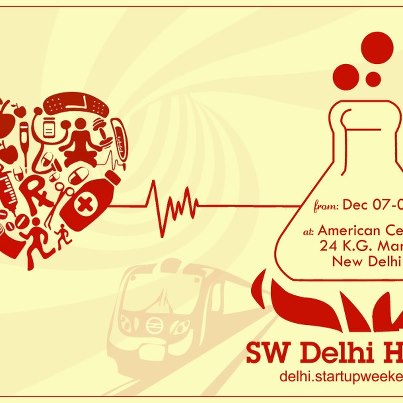
Start the revolution in Healthcare at StartupWeekend, New Delhi
Until the dawn of this decade not many people would have thought of transforming the way dismal healthcare system works in India let alone doing it over the course of 2 days but this is about to change as the Startup Weekend comes to Delhi on 7 Dec with a sole focus of encouraging entrepreneurs who are passionate about revolutionizing the healthcare system in India. The event will provide an excellent platform where business people, doctors, designers and awesome developers can come together and take first steps towards developing the next big thing in healthcare!
The agenda for the weekend is jam packed with keynote addresses from eminent speakers, exciting pitch sessions, intensive coaching from renowned mentors and enjoyable networking sessions. The event will be attended by leaders from health and start-up fraternity including Chavvi Gupta (Co-founder YoPharma), Subinder Khurana (Mentor, NASSCOM Emerge Forum), Paul Singh (Partner, 500 Startups), Maniraj Singh Juneja (Co-founder of MadeInHealth), Zachary Jones (CEO of Portea Medical) and Maninder Singh Grewal (MD at Religare Technologies).
Here’s an idea of what Start-up Weekend Delhi Health is going to look like from 7th December to 9th December 2012 at the American Center on KG Marg. All attendees will have an opportunity to pitch at least one idea in 60 seconds.
Please make your arrangements to be at the venue late into the night on Friday and Saturday. If you need a couch to crash on, start talking to other participants when you get to the venue. We will provide dinner on Friday evening, Breakfast/Lunch/Dinner on Saturday and Breakfast/Lunch/Snacks on Sunday.
Whether entrepreneurs found companies, find a cofounder, meet someone new, or learn a skill far outside their usual 9-to-5, everyone is guaranteed to leave the event better prepared to navigate the chaotic but fun world of start-ups. If you want to put yourself in the shoes of an entrepreneur, register now for the best weekend of your life!
Post Contributed by Abhimanyu Godara
10 reasons why I spend a lot of time in the product ecosystem
As product entrepreneurs, every hour of our time is important. We run businesses that can succeed or fail depending on our choices. One of those choices is the time we spend on the eco-system. Yet I have chosen to spend a lot of time on the ecosystem. Here is why.
1) Learn from mistakes and successes: How much ever you say that you are doing something unique, you will be surprised to see that there is someone else doing something similar. They have made mistakes and they have had successes. Learning not to do their mistakes and learning to emulate their success is vital for your success. Learn every day.
2) Networking is exponential: At first glance networking seems one to one. But if you are genuine, you would be surprised to find that networking can be exponential. Talk to someone, that person talks about you to someone else and soon its viral in a social sort of way. You never know how the stone that goes out comes back positively.
3) Sharpen your knife for free: Get that UI feedback, or sharpen that go to market strategy. What you thought was the best based on your own thinking may turn out to be second best before you got that good opinion.
4) Proactive helping gives joy: I find joy in sharing something to someone, which would save that person from huge mistakes or a lot of effort. Along the way if someone helps me back the same way, I will be happy, but not expect it.
5) Winning awards is much more than being egoistical: Your customers are looking for third party endorsements from reputed organizations. They may not ask you, but seeing one on your site gives them comfort. Win some for you and your company
6) Collaborate to win the market: Many of us attack the same market. How often do you get an inquiry that you cannot use. Share it with someone who need it. You will get one back some day. If we organize ourselves well we can even create a market.
7) Big brother isn’t so difficult with an ecosystem: Learn how to deal with the government. Taxes, banking, laws and much more can be handled much more easily by working with others in similar situations. It is not just learning how to handle a situation, but also acting jointly for getting something done.
8) Mentor or be mentored: You will be surprised at the number of senior people willing to spend their time with you without expecting anything back. Years of experience, yet ready to help you with your problem. Remember to give back why you are ready to mentor too.
9) Get Funded, find a partner, or even find a solution: The ecosystem is a magnet for all kinds of people – investors, solution partners, suppliers and everything in between. Mingle around, be open and gain from it.
10) Make friends along the way: The moment someone realizes that you are helping not for monetary gain, but because you just want to help, you make a friend. Business acquaintances are aplenty, but a friend is rare. I’d love to nurture them.
I’ve met many people who have inspired me along the way. Surprisingly most of the people who inspired me are not ones who speak from podiums, but people who open their hearts out with their passion. Cheers to the software product ecosystem – whatever shape or form it is!!
Guest Post Contributed by George Vettath, Kallos Solutions. Image Courtesy – NPC, Zinnov, Martecker
Be a part of the journey to Product Nirvana!
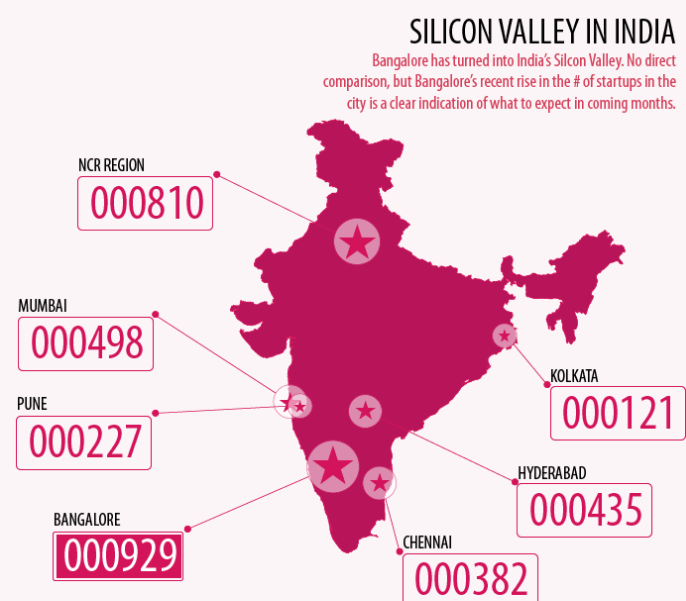
There has been a huge upstart in the number of product companies in India in the last 12 months. 700% is the estimate according to Zinnov Consulting. Most of them, as one keynote speaker at the recently held NASSCOM Product Conclave 2012 said ominously or more from experience being in the Silicon Valley, “will fail”. Why startups fail can be due to any number of reasons but the chances of succeeding is unarguably high if employees get product management right! So, what is Product Management? It is the art and science of creating the right product for the right user at the right time and in the process create a successful business! It is the functional domain which asks the questions what products do we build, who is it for, why do they need it, will they buy if we build it and how will the product work?
India Product Management Association (IPMA) is a voluntary, grassroots organization that is dedicated to helping product management as a function grow in maturity and capability all across the country. It is mostly focused on IT products for now. IPMA is organizing, in its second year after launch, the flagship annual event which brings together industry veterans to speak about various product management topics. This year’s theme, built on the confidence in the growth of product companies is, Journey to Product Nirvana! Journey to Product Nirvana takes the attendees from dissecting the nuances of product management across platforms and products to highlighting successes to sharing advice on specific challenges!
All this in a few hours with networking over lunch on Saturday December 8, at Microsoft office on Lavelle Road, Bangalore. The highlight of the event is the keynote by Ram Narayanan, a product management veteran on “Building customer centric product strategy”, a craft, very few get it right! The event also features Mukund Mohan, Pallav Nadhani, Pinkesh Shah, Saran Chatterjee, Sanjay Jain, Sarit Arora, Dhimant Parekh etc on panels.
IPMA has chapters in Bangalore, Pune and one more coming up in New Delhi soon. Visit http://indiapma.org for details or better yet register for this annual event before the limited seating runs out: http://indiapmaannualevent2012.doattend.com/
The event is sponsored by Confianzys and Tally Solutions and hosted by Microsoft.
Passion, Conviction and Approach to entrepreneurship
Many People keep wondering about the kid who rarely talks at home and not good to get grades in school but went on to become an amazing start-up genius.
Celebrated Lawyer of his time Moti lal Nehru was neither happy with the grades his son got in graduation in England nor with his career as Lawyer. But Jawahar Lal went on to become one of the most celebrated politicians of Independent India.
So, life is not about having a packaged education and career but entrepreneurship which is more about living one’s passion and conviction in life. Passion is the fuel that drives the creation of dreams and conviction is needed to realize those dreams.
This inborn commitment gets you out of bed every day. The aim should excite you to the core and channeling of passion becomes key to success.
Sometimes the idea may give the nay-sayer dizzying nausea due to its grandness and chances of failure.
Successful entrepreneurs know that failure is part of the journey, and that without failure, there is no success. Only in dictionary “success” comes before “failure” not in real life.
Passion without conviction may make a young entrepreneur shooting star in the harsh realities of the world. Conviction streamlines your passion into a steady flow. After all, most people have innovative ideas at some point in their lives.
It is conviction that determines what you do with your ideas.
Do you let it die? Or do you go for it?
Let`s face it: Those who have achieved extreme success had some extra mettle and more importantly commitment to their goal.
It takes strong will power for never want to quit and believing in something that defines you. It is this conviction that takes you to a state of euphoria in which give you confidence to think that you can tackle get to the unachievable which others.
Gandhi successfully took to the fasting for ‘self-penance’ to use his moral force against violence which became surmountable in certain periods before and after independence.
So believe in yourself and at the end of the day, everyone who told you no will deserves some credit for making you more committed towards the coveted goal of your life.
If you are able to relate with this, congratulations!
You`re ready to be an entrepreneur. Your quiver is ready with the right arrows – set of virtues, to yield big things in life. You were born to make a difference. Get on with your idea if you believe you have something special. Challenge the paradigms that bind you, and go change the world.
Contributed by Ajay Data, Data Infosys