

Micro, Small, and Medium Enterprises (MSMEs) are the backbone of India’s economy, driving growth and generating millions of jobs. Yet, despite their importance, MSMEs continue to face a massive credit gap. Traditional collateral-based lending often leaves them underserved, making access to timely and affordable credit one of their biggest challenges.
Over the years, schemes like Mudra Loans, CGTMSE, Capital & Interest Subsidy Programs, and the TReDS (Trade Receivables Discounting System) have contributed meaningfully to MSME financing. TReDS, in particular, has shown encouraging results by enabling invoice-based financing for a segment of MSMEs. However, these efforts only address a part of the problem. The diverse working capital cycles and sector-specific needs of MSMEs demand customised, flexible credit solutions.
This is where Cash Flow-Based Lending (CFL) stands out as a transformative approach. Instead of relying on collateral, CFL assesses an enterprise’s actual business cash flows to determine loan eligibility. This not only expands credit access to previously excluded businesses but also enables lenders to design loan products that align with real business needs.
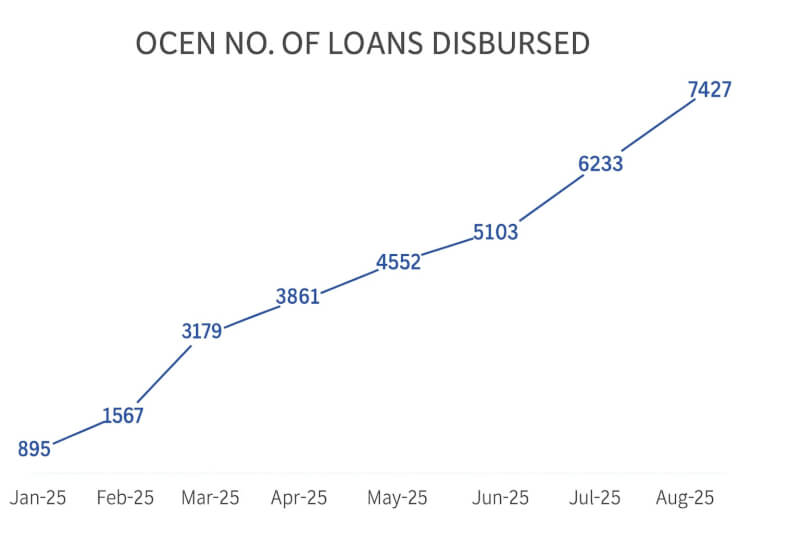
TReDS has already proven the power of cash flow-linked credit for receivables financing. But its scope is limited. India requires many more frameworks like TReDS, supported by scalable models such as OCEN (Open Credit Enablement Network), which democratise access to small-ticket, customised loans by leveraging digital cash flow data. While TReDS focuses on invoice-backed receivables, OCEN opens new possibilities through embedded finance and digital cash flow data. Both models are built on the same principle—cash flow as the foundation of creditworthiness—and can co-exist to bridge the critical MSME credit gap faster.
For more information, please visit: http://ocen.dev
Please note: The blog post is authored by our volunteer, Rahul Bhaik