

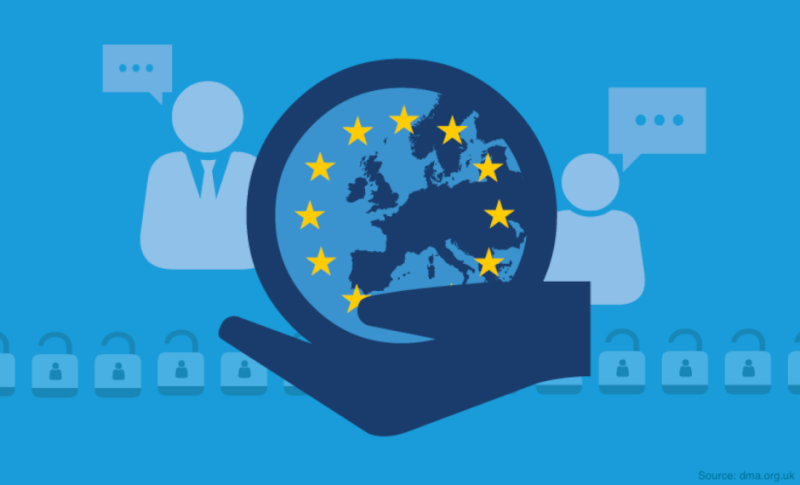
Policy Hacks Session on GDPR & DEPA

Here are concerns and curiosity about European Union General Data Protection Regime (GDPR) and there is a related issue in India being covered under Data Empowerment and Protection Architecture (DEPA) layer of India Stack being vigorously followed at iSPIRT.

iSPIRT organised a Policy Hacks session on these issues with Supratim Chakraborty (Data Privacy and Protection expert from Khaitan & Co.), Sanjay Khan Nagra (Core Volunteer at iSPIRT and M&A / corporate expert from Khaitan & Co) and Siddharth Shetty (Leading the DEPA initiative at iSPIRT).

Sanjay Khan interacted with both Siddharth and Supratim posing questions on behalf of Industry.

A video of the discussion is posted here below. Also, the main text of discussion is given below. We recommend to watch and listen to the video.

GDPR essentially is a regulation in EU law on data protection and privacy for all individuals within the European Union. It also addresses the export of personal data outside the EU.

Since it affects all companies having any business to consumer/people/individual interface in European Union, it will be important to understand this legal framework that sets guidelines for the collection and processing of personal information of individuals within the European Union (EU).

Supratim mentioned in the talk that GDPR is mentioned on following main principles.

  1. Harmonize law across EU
  2. Keep pace with technological changes happening
  3. Free flow of information across EU territory
  4. To give back control to Individual about their personal data

Siddharth explained DEPA initiative of iSPIRT. He mentioned that Data Protection is as important as Data empowerment. What this means is that individual has the ability to share personal data based on one’s choice to have access to services, such as financial services, healthcare etc. DEPA deal with consent layer of India Stack.

This will help service providers like account aggregators in building a digital economy with sufficient control of privacy concerns of the data. DEPA essentially is about building systems so that individual or consumer level individual is able to share data in a protected manner with service provider for specified use, specified time etc. In a sense, it addresses the concern of privacy with the use of a technology architecture.

DEPA is being pursued India and has nothing to do with EU or other countries at present.

For more details on DEPA please use this link here http://indiastack.org/depa/

Sanjay Khan poses a relevant question if GDPR is applicable even on merely having a website that is accessible of usable from EU?

Supratim explains, GDPR applicable, if there is involvement of personal data of the Data subjects in EU. Primarily GDPR gets triggered in three cases

  1. You have an entity in EU,
  2. You are providing Goods and services to EU data subjects whether paid for or not and
  3. If you are tracking EU data subjects.

Many people come in the third category. The third category will especially apply to those websites where it is proved that EU is a target territory e.g. websites in one of the European languages, payment gateway integration to enable payments in EU currency etc.

What should one do?

Supratim, further explains that the important and toughest task is data management with respect to personal data. How it came? where all it is lying? where is it going? who can access? Once you understand this map, then it is easier to handle. For example, a mailing list may be built up based on business cards that one may have been collected in business conferences, but no one keeps a track of these sources of collections. By not being able to segregate data, one misses the opportunity of sending even legitimate mailers.

Is a data subject receives and gets annoyed with an obnoxious email in a ‘subject’ that has nothing do with the data subject, the sender of email may enter into the real problem.

Siddharth mentioned that some companies are providing product and services in EU through a local entity are shutting shops.

Supratim, mentions that taking a proper explicit and informed consent in case of email as mentioned GDPR is a much better way to handle. He emphasised the earlier point of Data mapping mentioned above, on a question by Sanjay khan. Data mapping, one has to define GDPR compliant policies.

EU data subjects have several rights, edit date, port data, erase data, restrict data etc. GDRP has to be practised with actually having these rights enabled and policies and processed rolled out around them. There is no one template of the GDPR compliant policies.

Data governance will become extremely important in GDPR context, added Siddharth. Supratim added that having a Data Protection officer or an EU representative may be required as we go along in future based upon the complexity of data and business needs.

Can it be enforced on companies sitting in India? In absence of treaties, it may not be directly enforceable on Indian companies.  However, for companies having EU linkages, it may be a top-down effect if the controller of a company is sitting there.

Sanjay asked, how about companies having US presence and doing business in EU. Supratim’s answer was yes these are the companies sitting on the fence.

How about B2B interactions? Will official emails also be treated as personal? Supratim answers yes it may. Again it has to be backed by avenues where data was collected and legitimate use. Supratim further mentions that several aspects of the law are still evolving and idea at present is to take a conservative view.

Right now it is important to start the journey of complying with GDPR, and follow the earlier raised points of data mapping, start defining policy and processes and evolve. In due course, there will be more clarity. And if you are starting a journey to comply with GDPR, you will further be ready to comply with Indian privacy law and other global legal frameworks.

“There is no denying the fact that one should start working on GDPR”, said Sanjay. “Sooner the better”, added Supratim.

We will be covering more issues on Data Protection and Privacy law in near future.

Author note and Disclaimer: PolicyHacks, and publications thereunder, are intended to provide a very basic understanding of legal/policy issues that impact Software Product Industry and the startups in the eco-system. PolicyHacks, therefore, do not necessarily set out views of subject matter experts, and should under no circumstances be substituted for legal advice, which, of course, requires a detailed analysis of the relevant fact situation and applicable laws by experts in the subject matter on the case to case basis.

Understanding iSPIRT’s Entrepreneur Connect

There is confusion about how iSPIRT engages with entrepreneurs. This post explains to our engagement model so that the expectations are clear. iSPIRT’s mission is to make India into a Product Nation. iSPIRT believes that startups are a critical catalyst in this mission. In-line with the mission, we help entrepreneurs navigate market and mindset shifts so that some of them can become trailblazers and category leaders.

Market Shifts

Some years back global mid-market business applications, delivered as SaaS, had to deal with the ubiquity of mobile. This shift upended the SaaS industry. Now, another such market shift is underway in global SaaS – with AI/ML being one factor in this evolution.

Similar shifts are happening in the India market too. UPI is shaking up the old payments market. JIO’s cheap bandwidth is shifting the digital entertainment landscape. And, India Stack is opening up Bharat (India-2) to digital financial products.

At iSPIRT, we try to help market players navigate these shifts through Bootcamps, Teardowns, Roundtables, and Cohorts (BTRC).

We know that reading market shifts isn’t easy. Like stock market bubbles, market shifts are fully clear only in hindsight. In the middle, there is an open question whether this is a valid market shift or not (similar to whether the stock market is in a bubble or not). There are strong opinions on both sides till the singularity moment happens. The singularity moment is usually someone going bust by failing to see the shift (e.g. Chillr going bust due to UPI) or becoming a trailblazer by leveraging the shift (e.g. PhonePe’s meteoric rise).

Startups are made or unmade on their bets on market shifts. Bill Gates’ epiphany that browser was a big market shift saved Microsoft. Netflix is what it is today on account of its proactive shift from ground to cloud. Closer home, Zoho has constantly reinvented itself.

Founders have a responsibility to catch the shifts. At iSPIRT, we have a strong opinion on some market shifts and work with the founders who embrace these shifts.

Creating Trailblazers through Winning Implementations

We are now tieing our BTRC work to specific market-shifts and mindset-shifts. We will only work with those startups that have a conviction about these market/mindset-shifts (i.e., they are not on the fence), are hungry (and are willing to exploit the shift to get ahead) and can apply what they have learned from iSPIRT Mavens to make better products.

Another change is that we will work with young or old, big or small startups. In the past, we worked with only startups in the “happy-confused” stage.

We are making these changes to improve outcomes. Over the last four years, our BTRC engagements have generated very high NPS (Net Promoter Scores) but many of our startups continue to struggle with their growth ceilings, be it an ARR threshold of $1M, $5M, $10M… or whether it is a scalable yet repeatable product-market fit.

What hasn’t changed is our bias for working with a few startups instead of many. Right from the beginning, iSPIRT’s Playbooks Pillar has been about making a deep impact on a few startups rather than a shallow impact on many. For instance, our first PNGrowth had 186 startups. They had been selected from 600+ that applied. In the end, we concluded that we needed even better curation. So, our PNGrowth#2 had only 50 startups.

The other thing that hasn’t changed is we remain blind to whether the startup is VC funded or bootstrapped. All we are looking for are startups that have the conviction about the market/mindset-shift, the hunger to make a difference and the inner capacity to apply what you learn. We want them to be trailblazers in the ecosystem.

Supported Market/Mindset Shifts

Presently we support 10 market/mindset-shifts. These are:

  1. AI/ML Shift in SaaS – Adapt AI into your SaaS products and business models to create meaningful differentiation and compete on a global level playing field.

  2. Shift to Platform Products – Develop and leverage internal platforms to power a product bouquet. Building enterprise-grade products on a common base at fractional cost allows for a defensible strategy against market shifts or expanding market segments.

  3. Engaging Potential Strategic Partners (PSP) – PSPs are critical for scale and pitching to them is very different from pitching to customers and investors. Additionally, PSPs also offer an opportunity to co-create a growth path to future products & investments.

  4. Flow-based lending – Going after the untapped “largest lending opportunity in the world”.

  5. Bill payments – What credit and corporate cards were to West, bill payments will be to India due to Bharat Bill Pay System (BBPS).

  6. UPI 2.0 – Mass-market payments and new-age collections.

  7. Mutual Fund democratization – Build products and platforms that bring informal savings into the formal sector.

  8. From License Raj to Permissions Artefact for Drones – Platform approach to provisioning airspace from the government.

  9. Microinsurance for Bharat – Build products and platforms that reimagine Agri insurance on the back of India Stack and upcoming Digital Sky drone policy.

  10. Data Empowerment and Protection Architecture (DEPA) – with usage in financial, healthcare and telecom sectors.

This is a fluid list. There will be additions and deletions over time.

Keep in mind that we are trying to replicate for all these market/mindset-shifts what we managed to do for Desk Marketing and Selling (DMS). We focussed on DMS in early 2014 thanks to Mavens like Suresh Sambandam (KissFlow), Girish Mathrubootham (Freshworks), and Krish Subramaniam (Chargebee). Now DMS has gone mainstream and many sources of help are available to the founders.

Seeking Wave#2 Partners

The DMS success has been important for iSPIRT. It has given us the confidence that our BTRC work can meaningfully help startups navigate the market/mindset-shifts. We have also learned that the market/mindset-shift happens in two waves. Wave#1 touches a few early adopters. If one or more of them create winning implementations to become trailblazers, then the rest of the ecosystem jumps in. This is Wave#2. Majority of our startups embrace the market-shift in Wave#2.

iSPIRT’s model is geared to help only Wave#1 players. We falter when it comes to supporting Wave#2 folks. Our volunteer model works best with cutting-edge stuff and small cohorts.

Accelerators and commercial players are better positioned to serve the hundreds of startups embracing the market/mindset-shift in Wave#2. Together, Wave#1 and Wave#2, can produce great outcomes like the thriving AI ecosystem in Toronto.

To ensure that Wave#2 goes well, we have decided to include potential Wave#2 helpers (e.g., Accelerators, VCs, boutique advisory firms and other ecosystem builders) in our Wave#1 work (on a, needless to say, free basis). Some of these BTRC Scale Partners have been identified. If you see yourself as a Wave#2 helper who would like to get involved in our Wave#1 work, please reach out to us.

Best Adopters

As many of you know, iSPIRT isn’t an accelerator (like TLabs), a community (like Headstart), a coworking space (like THub) or a trade body. We are a think-and-do-tank that builds playbooks, societal platforms, policies, and markets. Market players like startups use these public goods to offer best solutions to the market.

If we are missing out on helping you, please let us know by filling out this form. You can also reach out to one of our volunteers here:

Chintan Mehta: AI shift in SaaS, Shift to Platform Products, Engaging PSPs

Praveen Hari: Flow-based lending

Jaishankar AL: Bill payments

Tanuj Bhojwani: Permissions Artefact for Drones

Nikhil Kumar: UPI2.0, MF democratization, Microinsurance for Bharat

Siddharth Shetty: Data Empowerment and Protection Architecture (DEPA)

Meghana Reddyreddy: Wave#2 Partners

We are always looking for high-quality volunteers. In case you’re interested in volunteering, please reach out to one of the existing volunteers or write to us at [email protected]